
Home > Dashboard > Compliance Dashboards
Download this articleCompliance Dashboards
The Compliance dashboards in EnPower enable you to view information on compliance and security in your organization. There are five types of compliance dashboards provided, including:
Exchange Compliance Dashboard
The following are the report charts that can be managed on the default Exchange compliance dashboard. You can also add them to your custom compliance dashboards as gadgets. They are all container-level reports and can only be added to container-level dashboards.
For the data retrieval of this dashboard, ensure that your mailboxes have been scanned into Exchange mailbox containers in AvePoint Online Services.
Litigation Hold Enabled Mailboxes
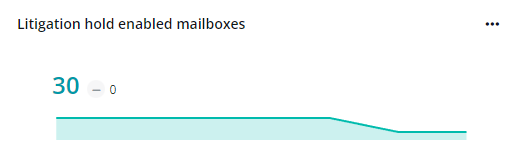
The Litigation hold enabled mailboxes shows the number of mailboxes that enabled litigation hold in the selected time range. The number on the chart is the number of litigation hold enabled mailboxes on the current day. The number is also compared with the data of the previous, and the difference is displayed as well.
Hover your mouse over the line to view the detailed data of a specific day.
Mailboxes Forwarding to External Domains
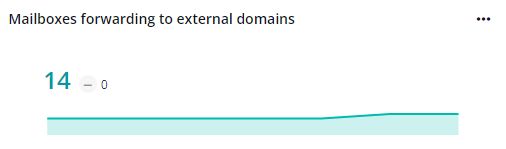
The Mailboxes forwarding to external domains show the number of mailboxes that enabled the automatic forwarding and are forwarding messages to addresses with external domains. The number on the chart is the number of relevant mailboxes on the current day. The difference with the data of the last day is also displayed.
Hover your mouse over the line to view the detailed data of a specific day.
Mailboxes Forwarding to Specific Domains
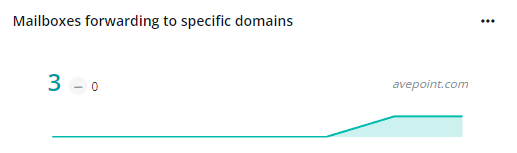
The Mailboxes forwarding to specific domains shows the number of mailboxes that enabled the automatic forwarding and are forwarding messages to the addresses with specified domains. You can specify the domains when you add the gadget, or you can edit the specified domains by editing the gadget. The number on the chart is the number of relevant mailboxes on the current day. The difference between the data of the last day is also displayed.
Hover your mouse over the line to view the detailed data of a specific day.
Litigation Hold Enabled Mailboxes in Departments

The Litigation hold enabled mailboxes in departments chart shows the number of mailboxes that has litigation hold enabled in each department. The X-axis depicts the departments, and the Y-axis depicts the number of relevant mailboxes.
Hover your mouse over the bars to view the detailed number of mailboxes in each department.
Click the action list icon (...) in the upper-right corner of the chart. Then click View the latest mailbox report to go to the Exchange page to view the mailboxes with litigation hold enabled.
Mailboxes Forwarding to External Domains in Departments

The Mailboxes forwarding to external domains in departments chart show the number of mailboxes that forward emails to external email addresses in each department. The X-axis depicts the departments, and the Y-axis depicts the number of mailboxes.
Hover your mouse over the bars to view the detailed number of mailboxes in each department.
Click the action list icon (...) in the upper-right corner of the chart. Then click View the latest mailbox report to go to the Exchange page to view the mailboxes that forward email messages to email addresses with external domains.
Mailboxes Forwarding to Specific Domains in Departments
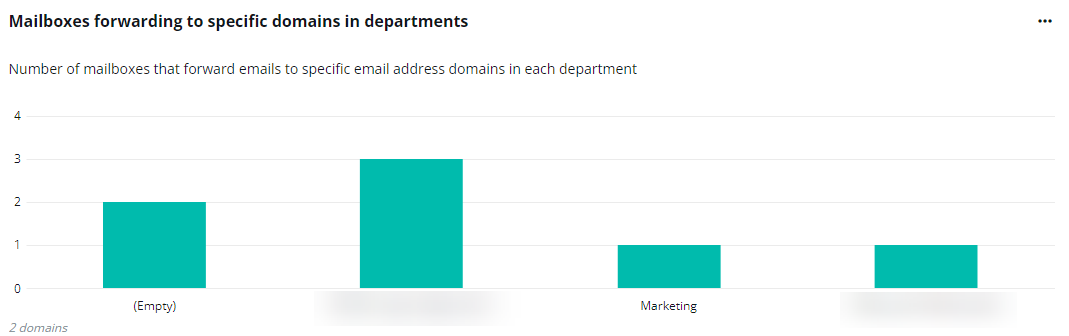
The Mailboxes forwarding to specific domains in departments chart shows the number of mailboxes that forward emails to specific email address domains in each department. You can specify the domains when you add the gadget, and you can update the specified domains by editing the gadget. The X-axis depicts the departments, and the Y-axis depicts the number of relevant mailboxes.
Hover your mouse over the bars to view the detailed number of mailboxes in each department.
Administration Compliance Dashboard
The following are the report charts that can be managed on the default Administration compliance dashboard. You can also add them to your custom compliance dashboards as gadgets. Apart from the Global administrator warning chart, all the other report charts are container-level charts and can only be added to container-level dashboards.
For the data retrieval of this dashboard, ensure that corresponding objects have been scanned into OneDrive and Microsoft 365 user containers in AvePoint Online Services.
Users with Administrative Roles
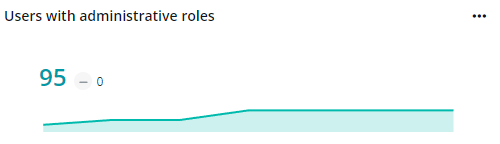
The Users with administrative roles shows the number of users with administrative roles in the selected time range. The number on the chart is the number of relevant users on the current day. The difference in the data of the previous day is also displayed.
Hover your mouse over the line to view the detailed data of a specific day.
Global Administrators
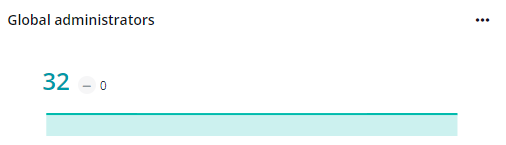
The Global administrators shows the number of users with the global administrator role in the selected time range. The number on the chart is the number of relevant users on the current day. The difference with the data of the previous day is also displayed.
Hover your mouse over the line to view the detailed data of a specific day.
OneDrive with Multiple Administrators
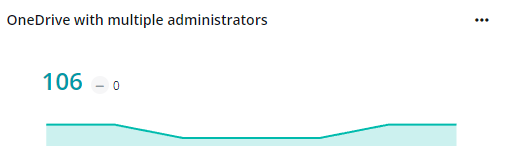
The OneDrive with multiple administrators shows the number of OneDrive that have more than 1 administrator in the selected time range. The number on the chart is the number of relevant OneDrive on the current day. The difference in the data of the previous day is also displayed.
Hover your mouse over the line to view the detailed data of a specific day.
OneDrive in the No access status are not included in the number here.
Administrative Role Assignments
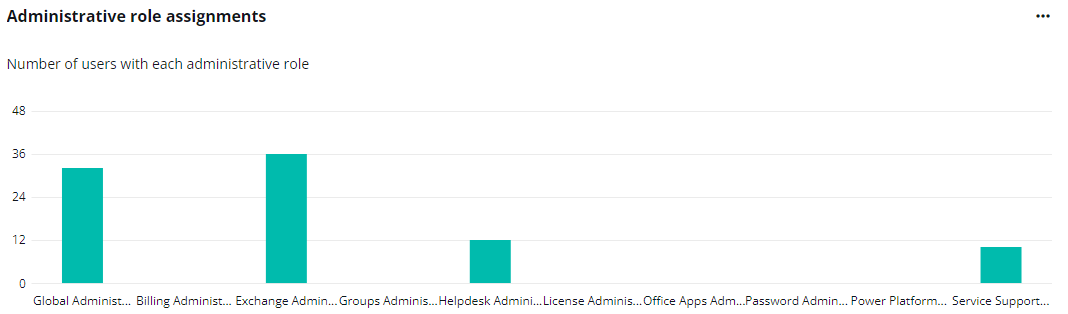
The Administrative role assignments chart shows the number of users to whom each administrative role was assigned. The X-axis depicts the administrative roles, and the Y-axis depicts the number of users.
Hover your mouse over each bar to view the detailed number of users with the specific administrative role.
Click the action list icon (...) in the upper-right corner of the chart. Then click View more to go to the Users page to view the detailed users with administrative roles.
Users with Administrative Roles in Departments

The Users with administrative roles in departments chart shows the number of users with administrative roles in each department. The X-axis depicts the departments, and the Y-axis depicts the number of users.
Hover your mouse over each bar to view the detailed number of each department.
Click the action list icon (...) in the upper-right corner of the chart. Then click View more to go to the Users page to view the detailed users with administrative roles.
Global Administrator Warning
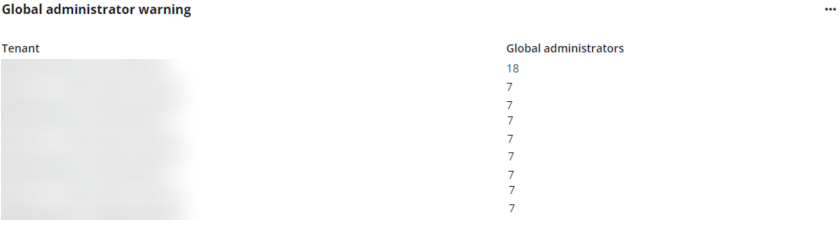
The Global administrator warning chart shows the top 10 tenants with the greatest number of Global administrators.
Click the action list icon (...) in the upper-right corner of the chart. Then click View the latest report to go to the Users page to view the detailed users with the Global administrator role.
The Global administrator warning chart is a tenant-level chart, and it can only be added to tenant-level dashboards as a gadget.
OneDrive with Multiple Administrators in Departments

The OneDrive with multiple administrators in departments chart shows the number of OneDrive with more than one administrator in each department. The X-axis depicts the departments, and the Y-axis depicts the number of OneDrive.
Hover your mouse over each bar to view the detailed number of each department.
Click the action list icon (...) in the upper-right corner of the chart. Then click View more to go to the OneDrive page to view the detailed OneDrive with multiple administrators.
OneDrive in the No access status are not included in the number here.
User Access Compliance Dashboard
The following are the report charts that can be managed on the default User access compliance dashboard. You can also add them to your custom compliance dashboards as gadgets. They are all container-level reports and can only be added to container-level dashboards.
For the data retrieval of this dashboard, ensure that your users have been scanned into Microsoft 365 users containers in AvePoint Online Services.
Users Disabled Strong Password Policy
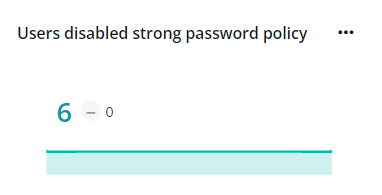
The Users disabled strong password policy card shows the number of users who has strong password policy disabled in the selected time range. The number on the chart is the number of relevant users on the current day. The difference with the data of the previous day is also displayed.
Hover your mouse over the line to view the detailed data of a specific day.
Password Changed/Reset Users
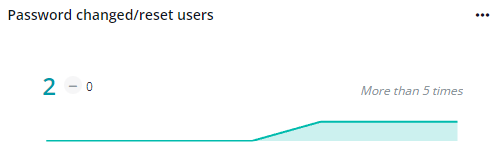
The Password changed/reset users shows the number of users who have changed/reset passwords more than the specified times. You can specify the threshold when you add the gadget. You can also update the threshold by editing the gadget. The number on the chart is the number of relevant users on the current day. The difference with the data of the previous day is also displayed.
Hover your mouse over the line to view the detailed data of a specific day.
Sign-In Failed Users

The Sign-in failed users shows the number of users who have failed to sign in more than the specified times. You can specify the threshold when you add the gadget. You can also update the threshold by editing the gadget. The number on the chart is the number of relevant users on the current day. The difference with the data of the previous day is also displayed.
Hover your mouse over the line to view the detailed data of a specific day.
A Microsoft Entra ID P1 or P2 license is required to retrieve the sign-in data.
Users with Multiple IP Addresses

The Users with multiple IP addresses shows the users who have signed in from more than the specified number of IP addresses. You can specify the threshold when you add the gadget. You can also update the threshold by editing the gadget. The number on the chart is the number of relevant users on the current day. The difference with the data of the previous day is also displayed.
Hover your mouse over the line to view the detailed data of a specific day.
Strong Password Policy
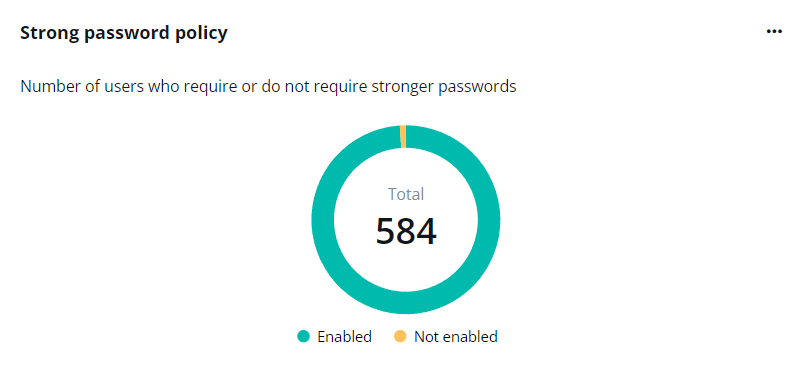
The Strong password policy chart shows the total number of users in your specified containers and the number of users who enabled or disabled strong password policy.
To hide data for a specific user password status, you can click the Enabled or Disabled data category. The corresponding data in the chart will be hidden. You can hover your mouse over each section of the chart to view the detailed data.
Click the action list icon (...) in the upper-right corner of the chart. Then click View users disabled strong password policy to go to the Users page to view the users who need to have stronger passwords.
Users Disabled Strong Password Policy in Departments

The Users disabled strong password policy in departments chart shows the number of users who disabled the strong password policy in each department. The X-axis depicts the departments, and the Y-axis depicts the number of users.
Hover your mouse over each bar to view the detailed number of relevant users in each department.
Click the action list icon (...) in the upper-right corner of the chart. Then click View more to go to the Users page to view the users without the policy enabled.
Password Never Expires
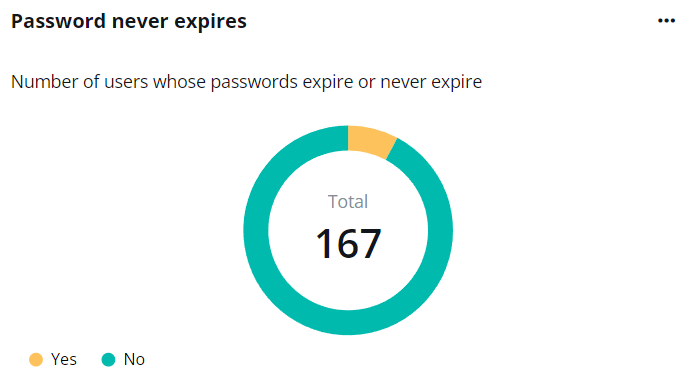
The Password never expired chart shows the total number of users in the specified containers and the number of users whose passwords expire or never expire. The Yes section shows the number of users whose passwords expire after a specific period. The No section shows the number of users whose passwords never expire.
To hide data for a specific user password status, you can click the Yes or No data category. The corresponding data in the chart will be hidden. You can hover your mouse over each section of the chart to view the detailed data.
Click the action list icon (...) in the upper-right corner of the chart. Then click View password never expired usersto go to the Users page to view the users whose passwords never expire.
Password Never Expired Users in Departments
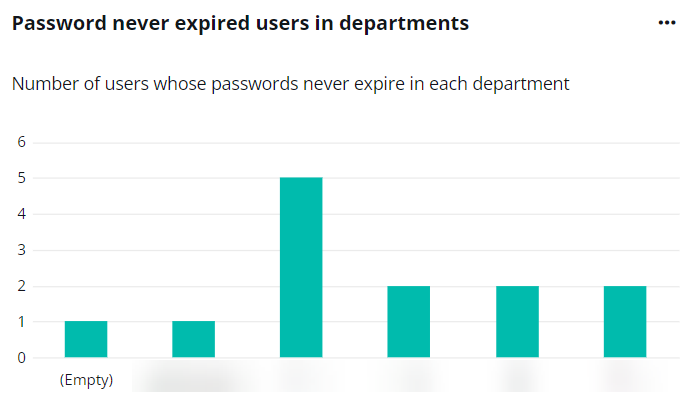
The Password never expired users in the departments chart shows the number of users whose passwords never expire in each department. The X-axis depicts the departments, and the Y-axis depicts the number of users.
Hover your mouse over each bar to view the detailed number of relevant users
Click the action list icon (...) in the upper-right corner of the chart. Then click View more to go to the Users page to view the users whose passwords never expire.
MFA Status
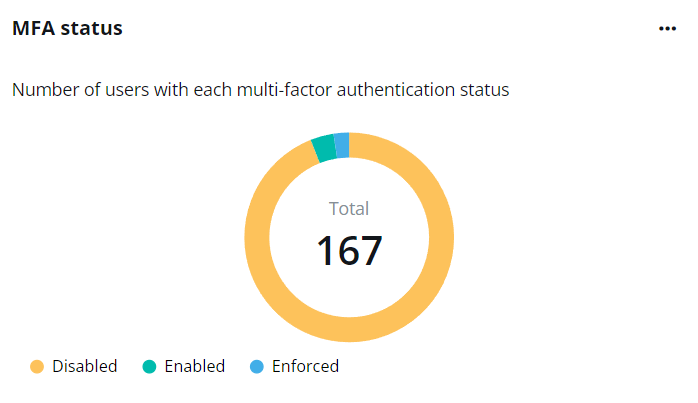
The MFA status chart shows the total number of users in your specified containers and the number of users with each multi-factor authentication status.
To hide data for a specific MFA status, you can click the Disabled, Enabled, or Enforced data category. The corresponding data in the chart will be hidden. You can hover your mouse over each section of the chart to view the detailed data.
Click the action list icon (...) in the upper-right corner of the chart. Then click View more to go to the Users page to view the users and their MFA status.
MFA Disabled Users in Departments
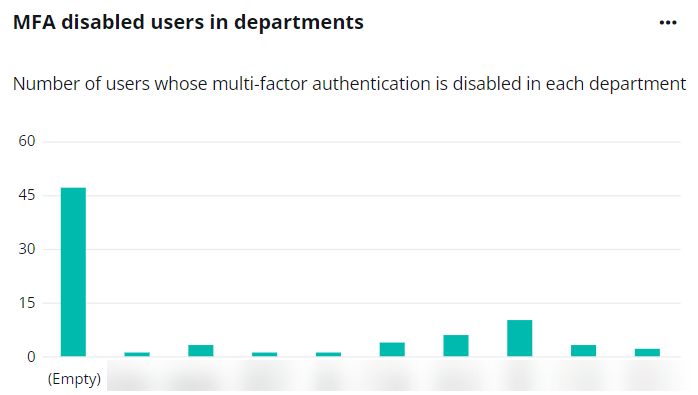
The MFA disabled users in departments chart shows the number of users whose multi-factor authentication is disabled in each department. The X-axis depicts the departments, and the Y-axis depicts the number of users.
Hover your mouse over each bar to view the detailed number of relevant users in each department.
Click the action list icon (...) in the upper-right corner of the chart. Then click View more to go to the Users page to view the users who have disabled their MFA.
MFA Required via Conditional Access
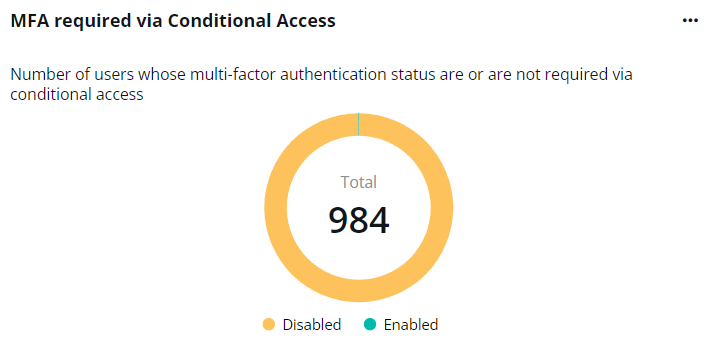
The MFA required via Conditional Access chart shows the total number of users in your specified containers and the number of users who has enabled or disabled MFA enforcement via Conditional Access.
To hide data for a status, click the Disabled, or Enabled data category. The corresponding data in the chart will be hidden. You can hover your mouse over each section of the chart to view the detailed data.
Click the action list icon (...) in the upper-right corner of the chart. Then click View more to go to the Users page to view the users and their status.
Password Changed/Reset Users in Departments
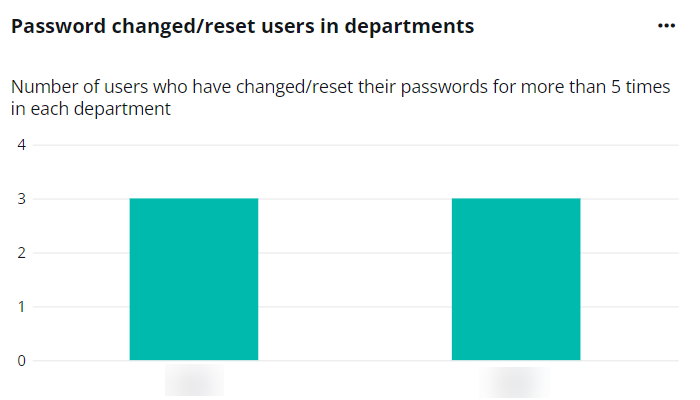
The Password changed/reset users in departments shows the number of users who have changed/reset their password more than the number of specified times in each department. You can specify the threshold for password change/reset when you add the gadget, and you can edit the threshold by editing the gadget.
Hover your mouse over each bar to view the detailed number of relevant users in each department.
Click the action list icon (...) in the upper-right corner of the chart. Then click View latest report to go to the Users page to view the users who have changed/reset their passwords.
Sign-In Failed Users in Departments
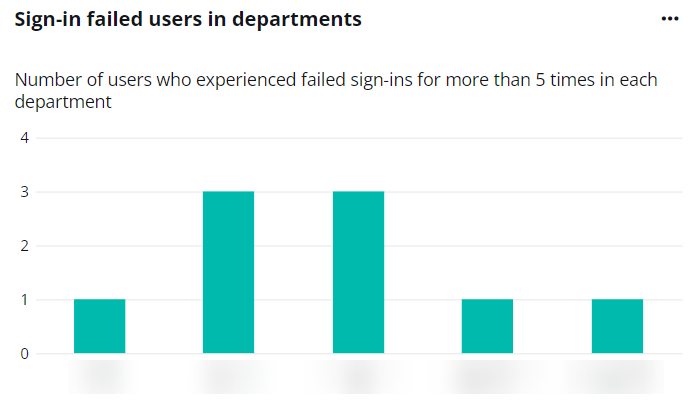
The Sign-in failed users chart shows the number of users who experienced failed sign-ins more than the specified number of times in each department. You can specify the threshold when you add the gadget. You can also update the threshold when editing the gadget.
The X-axis depicts the departments, and the Y-axis depicts the number of users.
Hover your mouse over each bar to view the detailed number of relevant users in each department.
Click the action list icon (...) in the upper-right corner of the chart. Then click View more to go to the Users > User sign-in page to view the users who failed to sign in.
A Microsoft Entra ID P1 or P2 license is required to retrieve the sign-in data.
Sign-In Failed Users with Multiple IP Addresses in Departments

The Sign-in failed users with multiple IP addresses in the departments chart shows the number of users who experienced failed sign-ins from more than the specified number of IP addresses in each department. You can specify the threshold when you add the gadget. You can also update the threshold by editing the gadget.
The X-axis depicts the departments, and the Y-axis depicts the number of users. You can hover your mouse over each bar to view the detailed number of relevant users in each department.
Click the action list icon (...) in the upper-right corner of the chart. Then click View more to go to the Users > User sign-in page to view the users who failed to sign in and their IP addresses.
A Microsoft Entra ID P1 or P2 license is required to retrieve the sign-in data.
Failed Sign-Ins in Departments

The Failed sign-ins in departments chart shows the number of failed sign-ins experienced by users in each department. The X-axis depicts the departments, and the Y-axis depicts the number of failed sign-ins.
Hover your mouse over each bar to view the detailed number of failed sign-ins in each department.
Click the action list icon (...) in the upper-right corner of the chart. Then click View more to go to the Users > User sign-in page to view the failed user sign-ins.
A Microsoft Entra ID P1 or P2 license is required to retrieve the sign-in data.
Collaboration Compliance Dashboard
The following are the report charts that can be managed on the default collaboration compliance dashboard. You can also add them to your custom compliance dashboards as gadgets. They are all container-level reports and can only be added to container-level dashboards.
You must have a subscription to AvePoint Insights to access the collaboration dashboard. If you would like to subscribe to Insights, contact your AvePoint account manager. For more information on Insights, see the Insights User Guide.
External Links
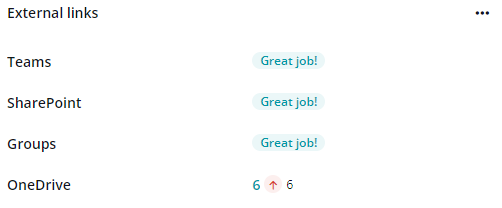
The External links shows the number of external links shared in Teams SharePoint sites, Groups, and OneDrive accounts of the last aggregated time and its difference between the data 7 days ago. Great job! is shown if no external links have been discovered in the data scope.
Click the number to view more details in AvePoint Insights.
External Users
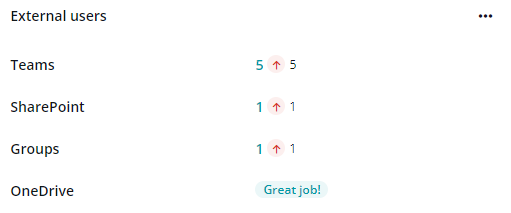
The External users shows the number of external links shared in Teams SharePoint, Groups, and OneDrive of the last aggregated time and its difference between the data 7 days ago. Great job! is shown if no external users have been discovered in the data scope.
Click the number to view more details in AvePoint Insights.
Sensitive Items
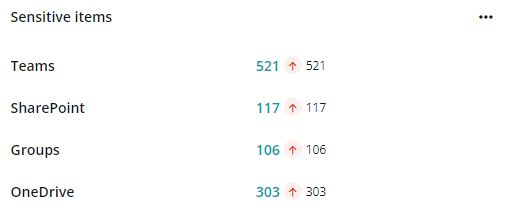
The Sensitive items shows the number of external links shared in Teams SharePoint, Groups, and OneDrive of the last aggregated time and its difference between the data 7 days ago. Great job! is shown if no sensitive items have been discovered in the data scope.
Click the number to view more details in AvePoint Insights.
External Links Trend

The External links trend shows the trend of external links shared in Teams Groups, OneDrive, and SharePoint in the last 7 days.
You can click the service name to view the trend for each service type and hover your mouse over the line to view the detailed number of external links on each day.
External Users Trend

The External users trend shows the trend of external users in Teams Groups, OneDrive, and SharePoint in the last 7 days.
Click the service name to view the trends for each service type and hover your mouse over the line to view the detailed number of external users on each day.
Sensitive Items Trend
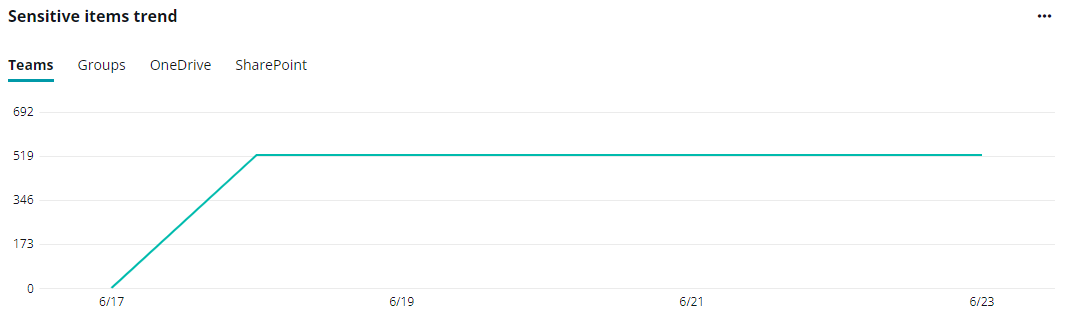
The Sensitive items trend shows the trends of sensitive items in Teams Groups, OneDrive, and SharePoint in the last 7 days.
Click the service name to view the trend for each service type and hover your mouse over the line to view the detailed number of sensitive items on each day.
Top 10 Compliance Risks Dashboard
The following are the report charts that can be managed on the default Top 10 compliance risks dashboard. You can also add them to your custom compliance dashboards as gadgets. Apart from the Top 10 external domains chart, all the other report charts are container-level charts and can only be added to container-level dashboards.
For the data retrieval of this dashboard, ensure that corresponding objects have been scanned into OneDrive and Microsoft 365 User containers in AvePoint Online Services.
Top 10 Countries with Failed Sign-Ins

The Top 10 countries with failed sign-ins chart shows the top 10 countries in which the users experienced failed sign-ins. The X-axis depicts the number of failed sign-ins, and the Y-axis depicts the countries.
Hover your mouse over each bar to view the detailed number of failed sign-ins in each county.
Click the action list icon (...) in the upper-right corner of the chart. Then click View more to go to the Users > User sign-in page to view the failed user sign-ins and their countries.
A Microsoft Entra ID P1 or P2 license is required to retrieve the sign-in data.
Top 10 Departments with Failed Sign-Ins
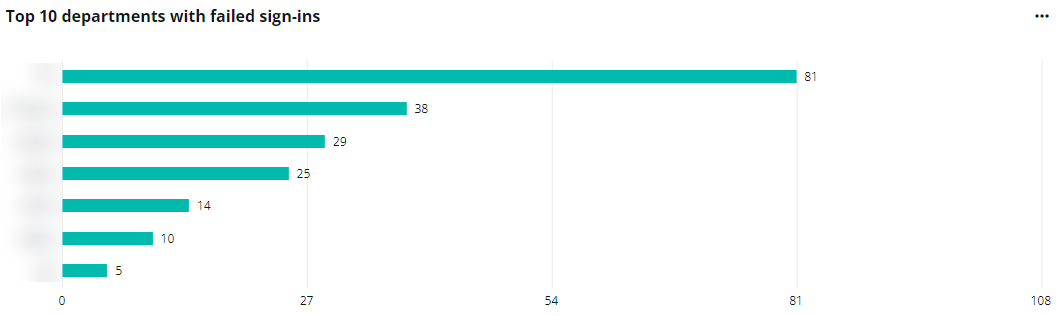
The Top 10 departments with failed sign-ins chart shows the top 10 departments in which the users experienced failed sign-ins. The X-axis depicts the number of failed sign-ins, and the Y-axis depicts the departments.
Hover your mouse over each bar to view the detailed number of failed sign-ins in each department.
Click the action list icon (...) in the upper-right corner of the chart. Then click View more to go to the Users > User sign-in page to view the failed user sign-ins and their departments.
A Microsoft Entra ID P1 or P2 license is required to retrieve the sign-in data.
Top 10 Sign-In Failed Users
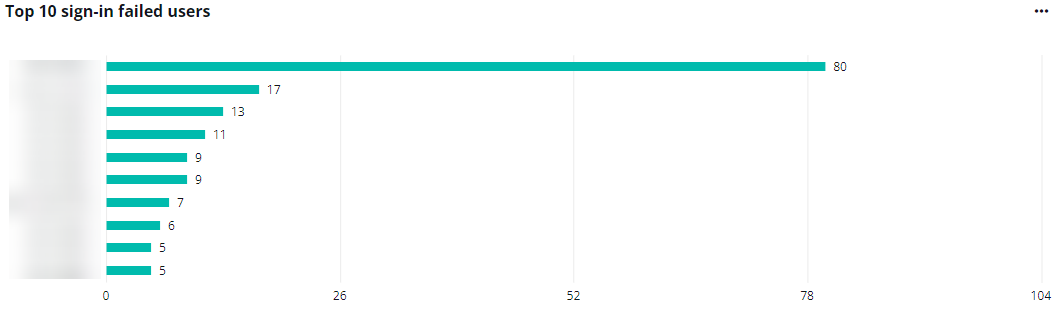
The Top 10 sign-in failed users shows the top 10 users who experienced failed sign-ins. The X-axis depicts the number of failed sign-ins, and the Y-axis depicts the users.
Hover your mouse over each bar to view the detailed number of failed sign-ins experienced by each user.
Click the action list icon (...) in the upper-right corner of the chart. Then click View more to go to the Users > User sign-in page to view the user sign-ins.
A Microsoft Entra ID P1 or P2 license is required to retrieve the sign-in data.
Top 10 External Domains of Guests

The Top 10 external domains of guests shows the top 10 external domains that the guest users in the specified tenant belong to. The X-axis depicts the number of guests, and the Y-axis depicts the external domains.
Hover your mouse over each bar to view the detailed number of guests with each external domain.
The Top 10 external domains chart is a tenant-level chart, and it can only be added to tenant-level dashboards as a gadget.
Top 10 OneDrive with Multiple Administrators

The Top 10 OneDrive with multiple administrators chart shows the top 10 OneDrive by the number of administrators.
Click each OneDrive to go to the corresponding OneDrive details page to view and manage the administrators.
Click the action list icon (...) in the upper-right corner of the chart. Then click View more to go to the OneDrive page to view the OneDrive and their administrator numbers.