
Home > Manage the Backup Scopes for Azure SQL > Create a New Backup Scope for Azure SQL Backup
Download this articleCreate a New Backup Scope for Azure SQL Backup
The Azure SQL Backup service supports two modes for backup scope configuration:
- SaaS infrastructure mode - Provides centralized management, automation, and robust data protection to empower organizations with scalable, policy-driven backup solutions. For details, refer to Use the SaaS Infrastructure Mode.
- CAP Gateway mode - Reduces network latency while enhancing backup performance. Simply create a CAP Gateway and use this mode for your backup operations. For details, refer to Use the CAP Gateway Mode and Manage CAP Gateways.
For details on choosing a backup mode, you can see How to choose a backup mode: SaaS infrastructure mode VS CAP Gateway mode in the Best Practices section.
Use the SaaS Infrastructure Mode
To create a new backup scope, follow the steps below:
-
Go to the Backup page on the new UI.
-
Click on the Azure SQL service tile or click the More actions button on the upper-right corner of the Azure SQL service tile and click Configure backup scope from the drop-down list.
-
In the Configure backup scope for Azure SQL page, all the existing backup scopes for Azure SQL are listed in the table. You can use the search box to search for the backup scopes by name and manage the columns to adjust the view of the backup scopes.
NOTEYou can click the Refresh button in the upper-right corner of this page to retrieve the latest data list for Azure SQL databases. The Last refreshed time is displayed next to the Refresh button. Additionally, the data list will be automatically refreshed daily at 00:00 local time.
-
Click the Create button and select Azure SQL backup.
- In the Choose a mode forAzure SQL backup page, select SaaS infrastructure mode and click Continue. The Create backup scope panel appears.
-
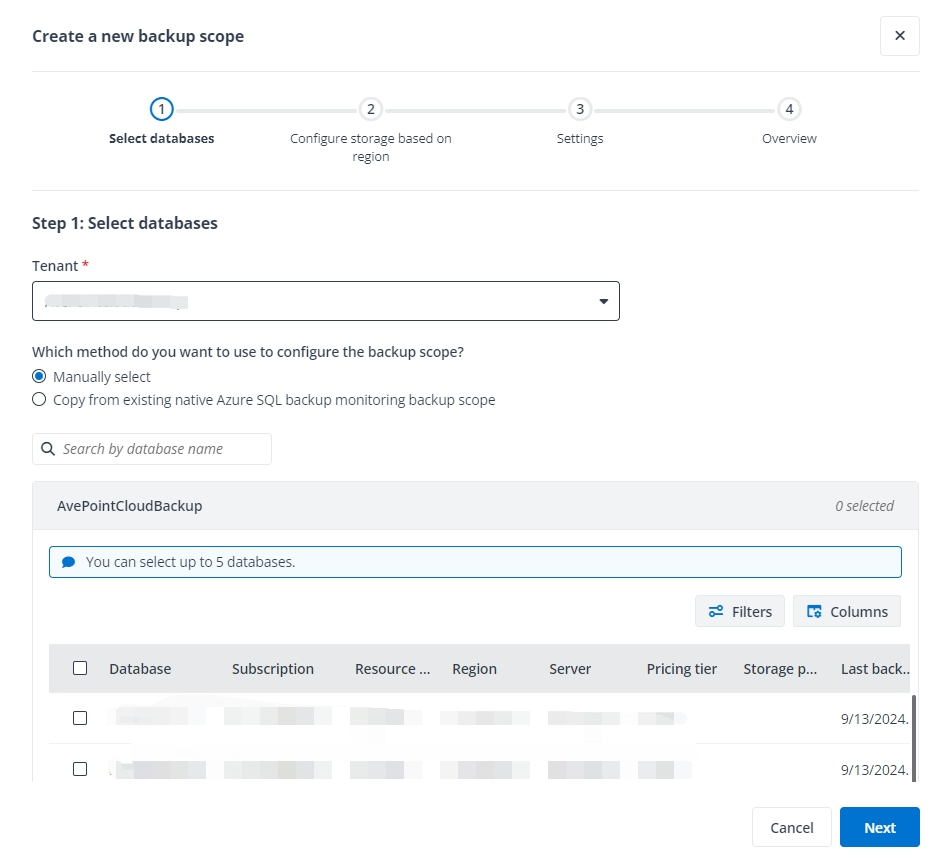
In the Select databases step, select the tenant and choose the method you want to use to configure the backup scope.
-
Manually select - Select the databases that you want to add to the backup scope. You can use Filters to find the databases you want to protect or use the Search box to search for the databases via the keywords in the name. The number of your selection will be displayed on the row of the tenant name.
-
Copy from existing native Azure SQL backup monitoring backup scope - Select the backup scopes from the native Azure SQL backup monitoring backup scopes drop-down list.
-
-
Click Next and you will go to the Configure storage based on region step to configure a storage profile for each region. You can select a storage type and then select storage profiles. You can use an existing storage profile or create a new storage profile to store the backup data for the databases in the same region. For details on configuring storage location, refer to Manage Your Storage.
NOTEIf you have enabled a firewall for your Azure SQL databases, you need to add the AvePoint IP addresses to your Azure SQL database account firewall or configure the firewall to allow AvePoint agent servers running on a dedicated ARM Vnet subnet to access your storage location. For details, refer to Allow AvePoint Agent Servers to Access Your Storage Account.
-
After you finish the storage configuration for each region, click Next to configure the scope information, schedule, and data retention settings. Refer to the following:
-
Scope information - Enter a name and description for the scope you are creating. The description is optional.
-
Schedule - Select days, weeks, months, or years as the unit of time for the backup interval, enter a number in the text box after Every, and then configure the start time for your first backup job.
NOTEThe days option is only available if you use your own storage to store backup data.
-
Notification - Check the notification profiles which will be applied to the backup scope.
-
Retention policy - Configure the retention period to keep the backup data in the storage.
NOTEFor existing backup scopes with the legacy retention policy, you can click Switch to modern retention policy to configure the new retention period.
-
Daily recovery point - Enter a number in the text box and select days or weeks from the drop-down list. The retention period must be between 7 and 28 days.
-
Weekly recovery point - Enter a number in the text box and select weeks or months from the drop-down list. The retention period must be between 2 and 12 weeks.
-
Monthly recovery point - Enter a number in the text box. The retention period must be between 1 and 12 months.
-
Yearly recovery point - If you are using AvePoint default storage with unlimited retention period, the Unlimited option is selected automatically. If you want to use a custom retention period, select Custom.
-
-
-
Click Next to review your settings.
-
Click Save to save this backup scope. The backup for the databases in this backup scope will roll out as scheduled. For more details about monitoring the backups, refer to Monitor Your Backup.
Use the CAP Gateway Mode
To create a new backup scope, follow the steps below:
-
Go to the Backup page on the new UI.
-
Click on the Azure SQL service tile or click the More actions button on the upper-right corner of the Azure SQL service tile and click Configure backup scope from the drop-down list.
-
In the Configure backup scope for Azure SQL page, all the existing backup scopes for Azure SQL are listed in the table. You can use the search box to search for the backup scopes by name and manage the columns to adjust the view of the backup scopes.
NOTEYou can click the Refresh button in the upper-right corner of this page to retrieve the latest data list for Azure SQL databases. The Last refreshed time is displayed next to the Refresh button. Additionally, the data list will be automatically refreshed daily at 00:00 local time.
-
Click the Create button and select Azure SQL backup.
-
In the Choose a mode for Azure SQL backup page, select CAP Gateway mode and click Continue. The Create backup scope panel appears.
-
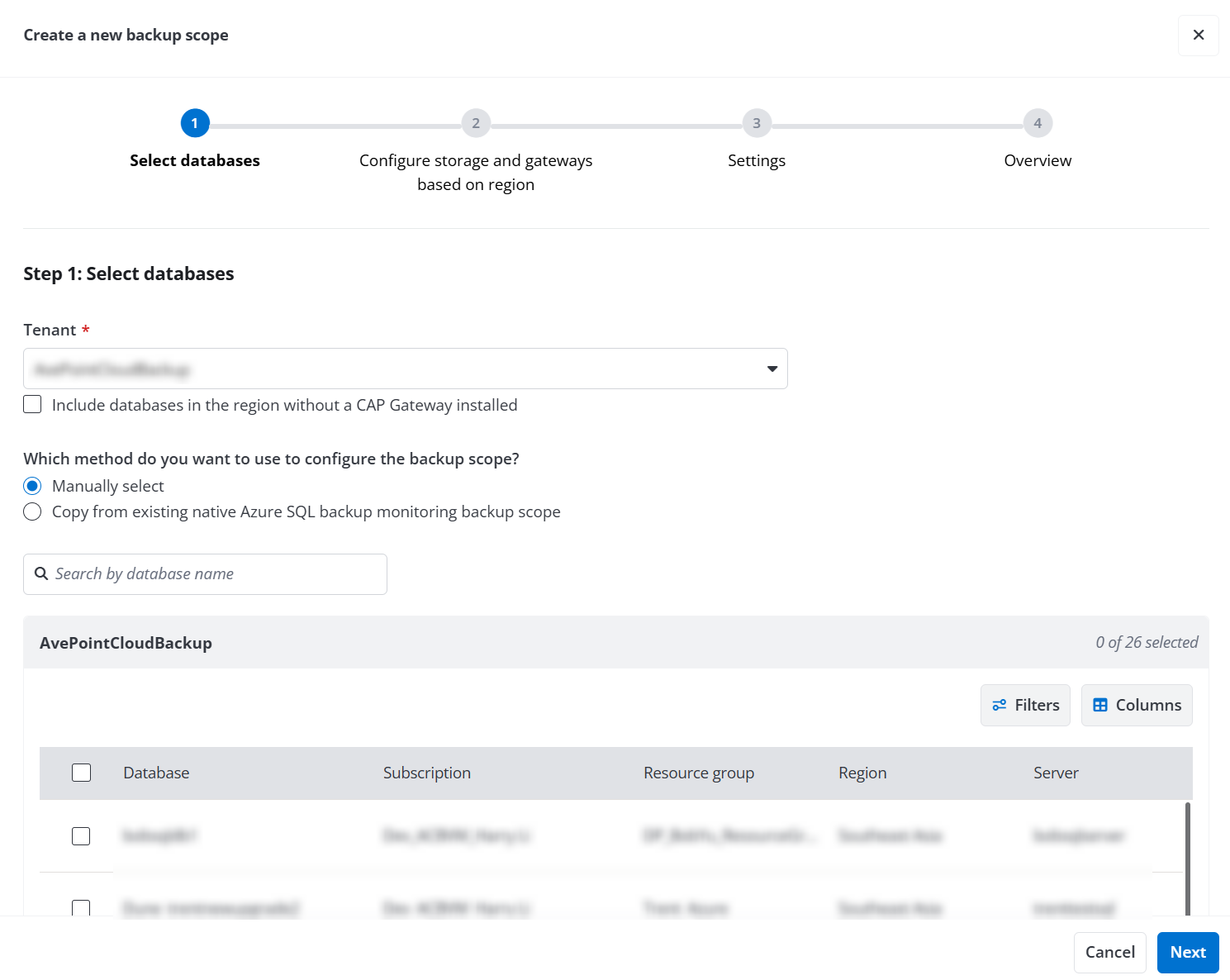
In the Select databases step, select the tenant and choose the method you want to use to configure the backup scope.
-
Manually select - Select the databases that you want to add to the backup scope. You can use Filters to find the databases you want to protect or use the Search box to search for the databases via the keywords in the name. The number of your selection will be displayed on the row of the tenant name.
-
Copy from existing native Azure SQL backup monitoring backup scope - Select the backup scopes from the native Azure SQL backup monitoring backup scopes drop-down list.
-
-
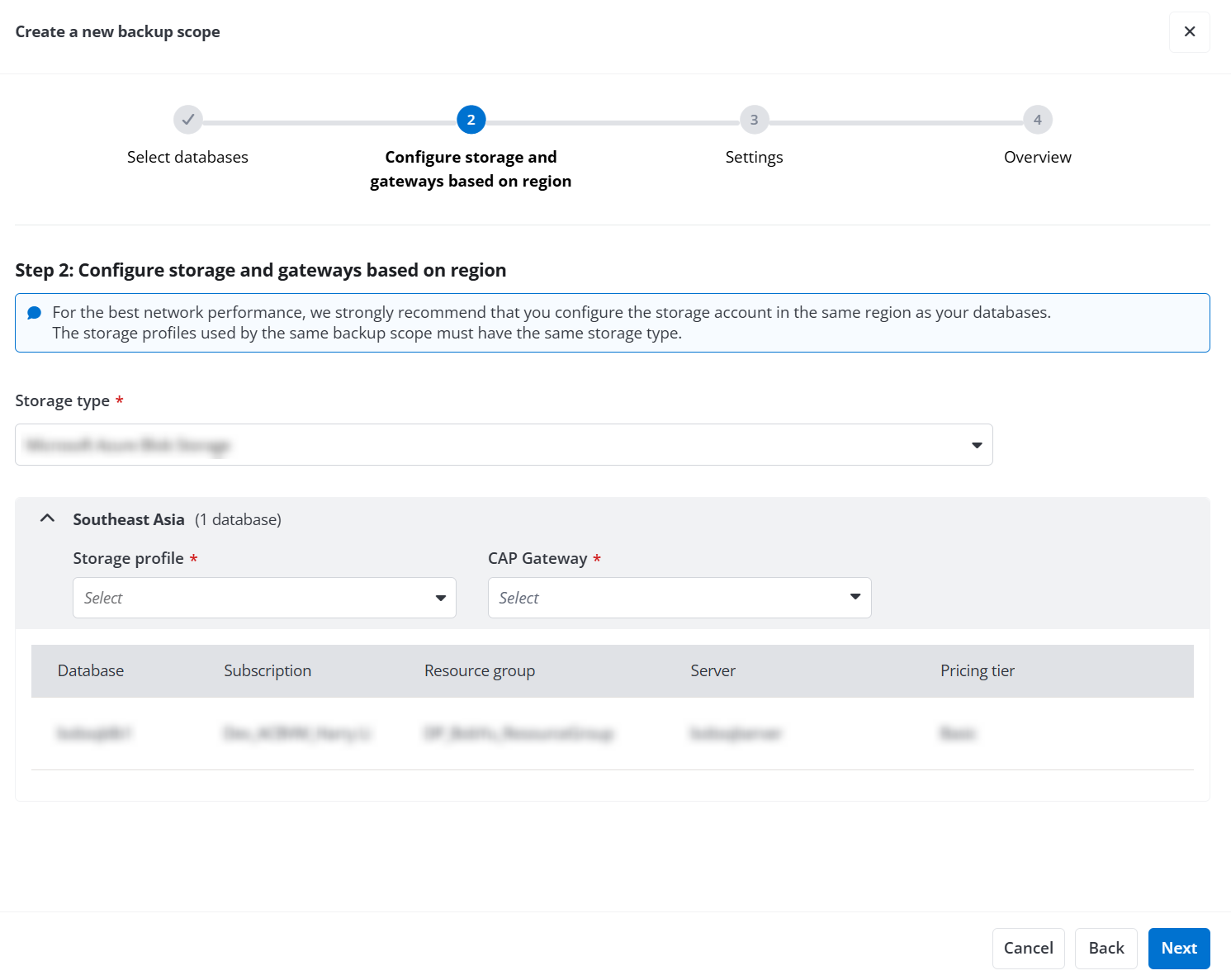
Click Next and you will go to the Configure storage based on region step to configure a storage profile and CAP Gateway for each region. You can select a storage type and then select storage profiles.
-
You can use an existing storage profile or create a new storage profile to store the backup data for the databases in the same region. For details on configuring storage location, refer to Manage Your Storage.
-
For details on configuring CAP gateways, refer to Manage CAP Gateways.
 NOTE
NOTEIf you have enabled a firewall for your Azure SQL databases, you need to add the AvePoint IP addresses to your Azure SQL database account firewall or configure the firewall to allow AvePoint agent servers running on a dedicated ARM Vnet subnet to access your storage location. For details, refer to Allow AvePoint Agent Servers to Access Your Storage Account.
-
-
After you finish the storage configuration for each region, click Next to configure the scope information, schedule, and data retention settings. Refer to the following:
-
Scope information - Enter a name and description for the scope you are creating. The description is optional.
-
Schedule - Select days, weeks, months, or years as the unit of time for the backup interval, enter a number in the text box after Every, and then configure the start time for your first backup job.
NOTE:days option is only available if you use your own storage to store backup data.
-
Notification - Check the notification profiles which will be applied to the backup scope.
-
Retention policy - Configure the retention period to keep the backup data in the storage.
NOTEFor existing backup scopes with the legacy retention policy, you can click Switch to modern retention policy to configure the new retention period.
-
Daily/Hourly recovery point - Enter a number in the text box and select days or weeks from the drop-down list. The retention period must be between 7 and 28 days.
-
Weekly recovery point - Enter a number in the text box and select weeks or months from the drop-down list. The retention period must be between 2 and 12 weeks.
-
Monthly recovery point - Enter a number in the text box. The retention period must be between 1 and 12 months.
-
Yearly recovery point - If you are using AvePoint default storage with unlimited retention period, the Unlimited option is selected automatically. If you want to use a custom retention period, select Custom.
-
-
-
Click Next to review your settings.
-
Click Save to save this backup scope. The backup for the databases in this backup scope will roll out as scheduled. For more details about monitoring the backups, refer to Monitor Your Backup.