Home > User Guide > Integrate with Tableau and Power BI > Connect to Tableau > Generate a Data Report in Tableau
Export to PDFGenerate a Data Report in Tableau
-
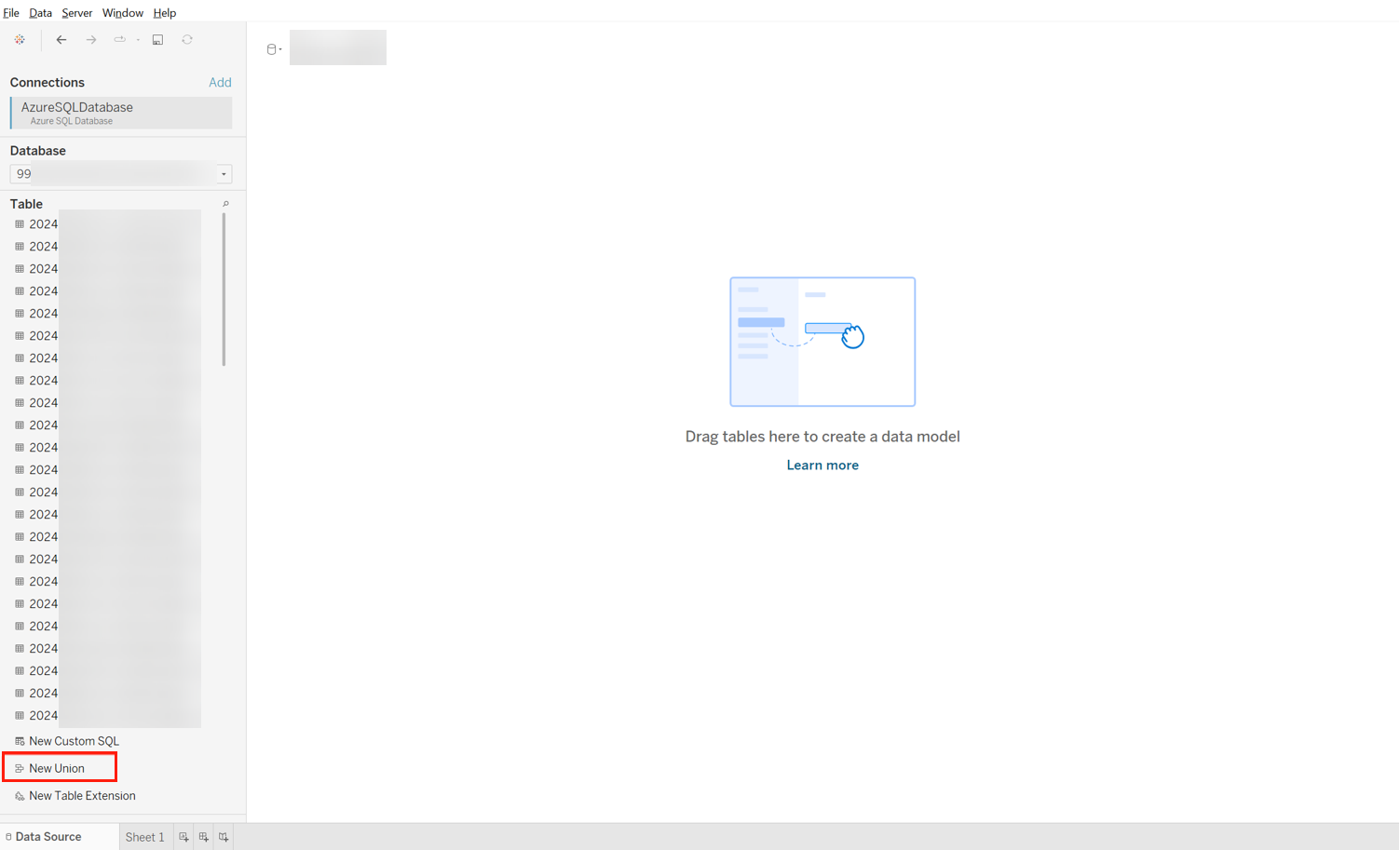
After connecting your Salesforce backup data, double-click New Union in the left pane.
-
-
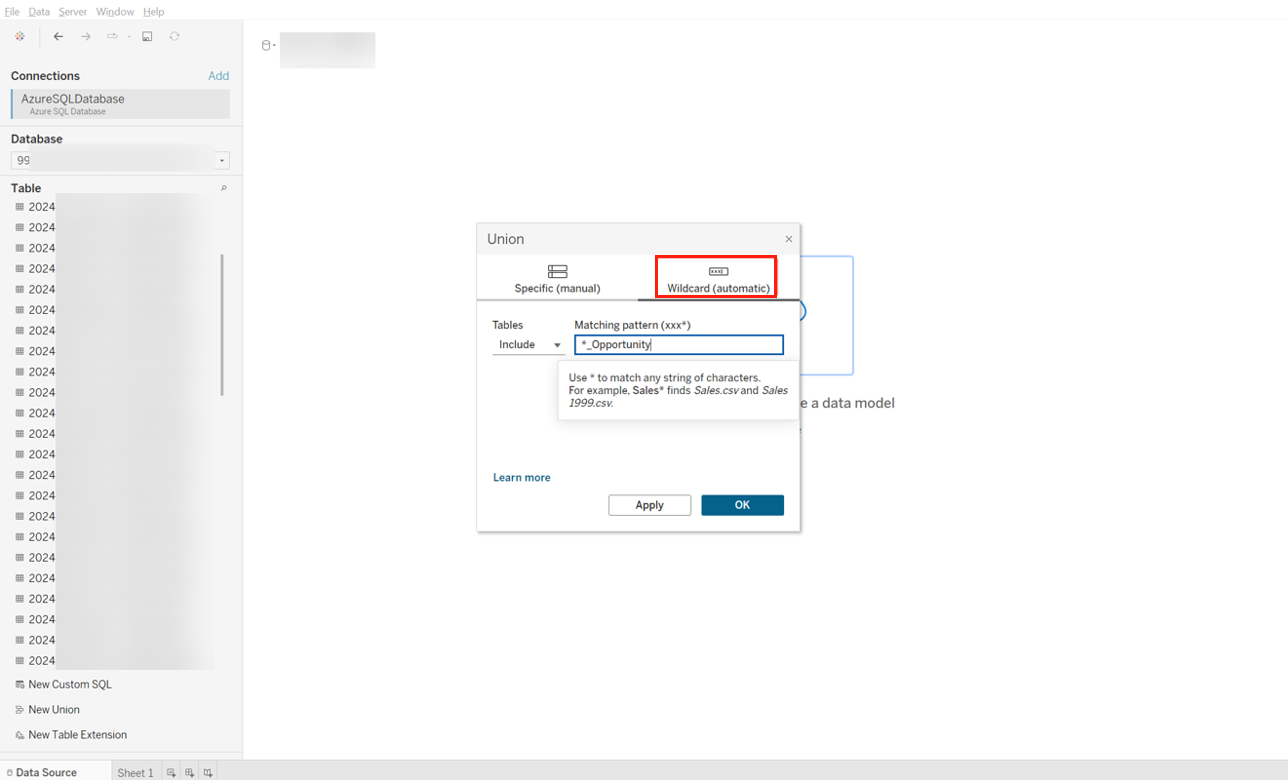
In the pop-up window, select the Wildcard (automate) tab. In the Matching pattern field, enter *_Object. Replace Object with an object type to include all tables of the object. Then click OK.
-
-
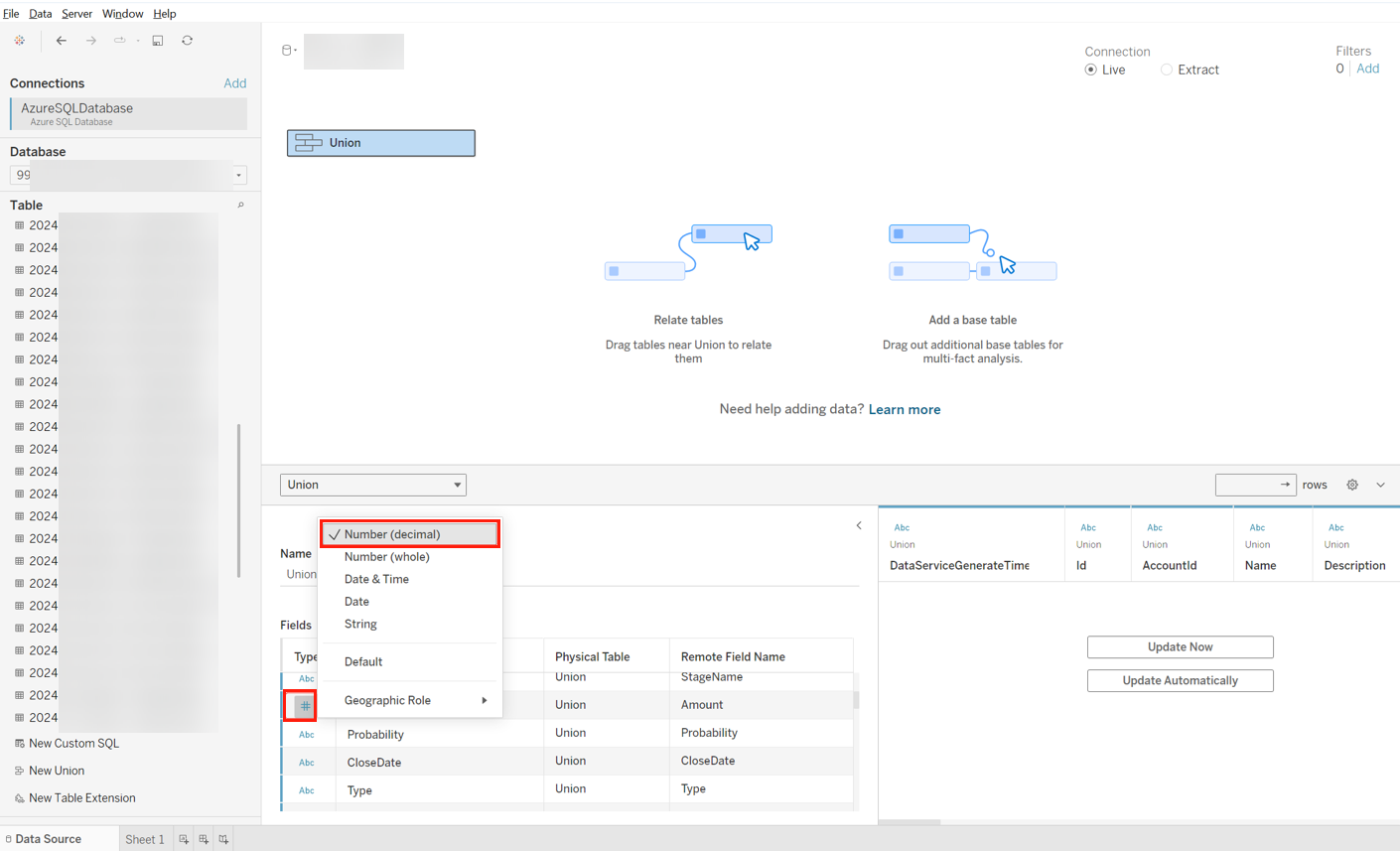
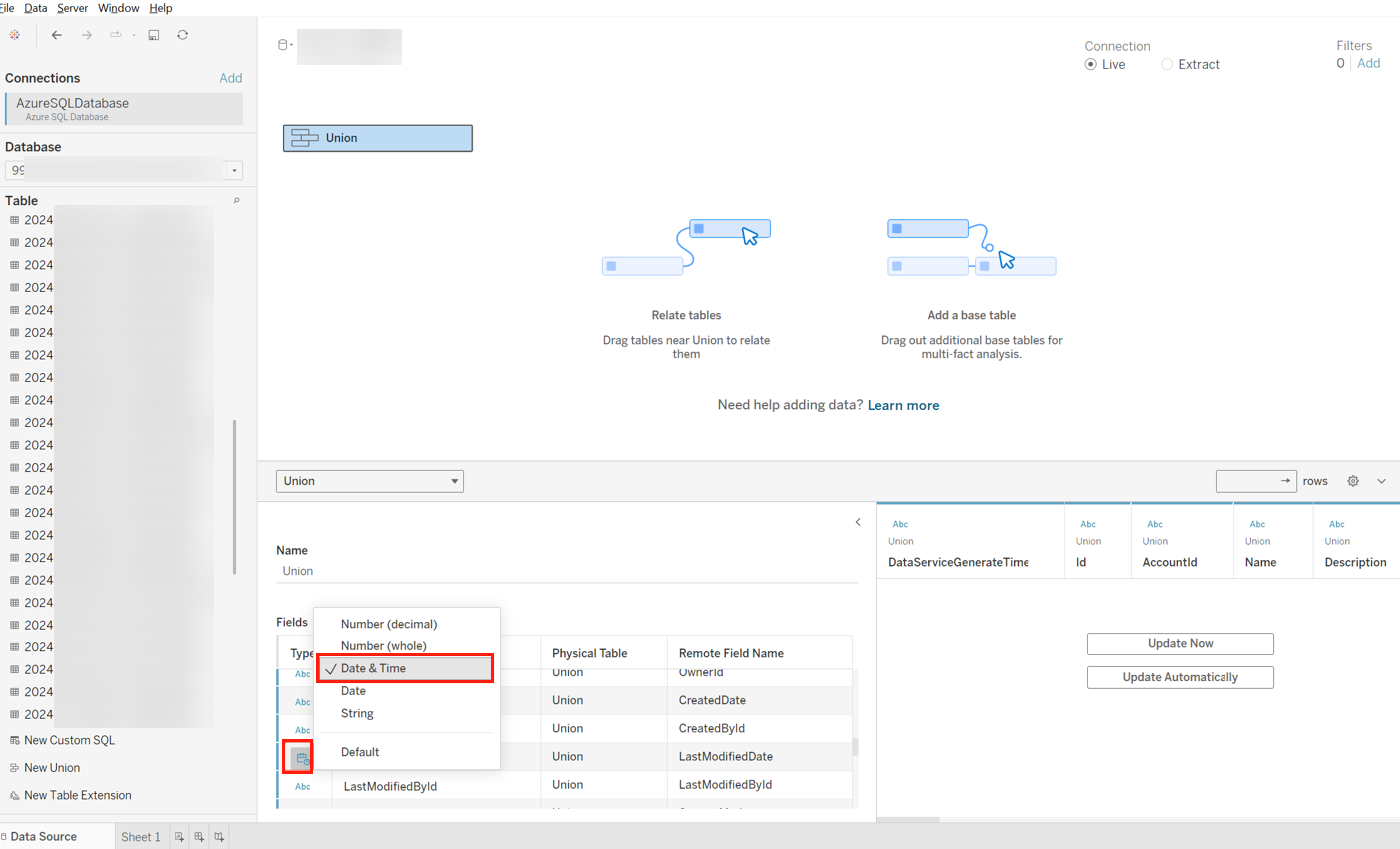
Since all fields are currently strings, change necessary fields to the correct type. For example, click the Type icon in the Amount row to change the type to Number (decimal), and click the Type icon in the LastModifiedDate row to change the type to Date &Time.
-
-
-
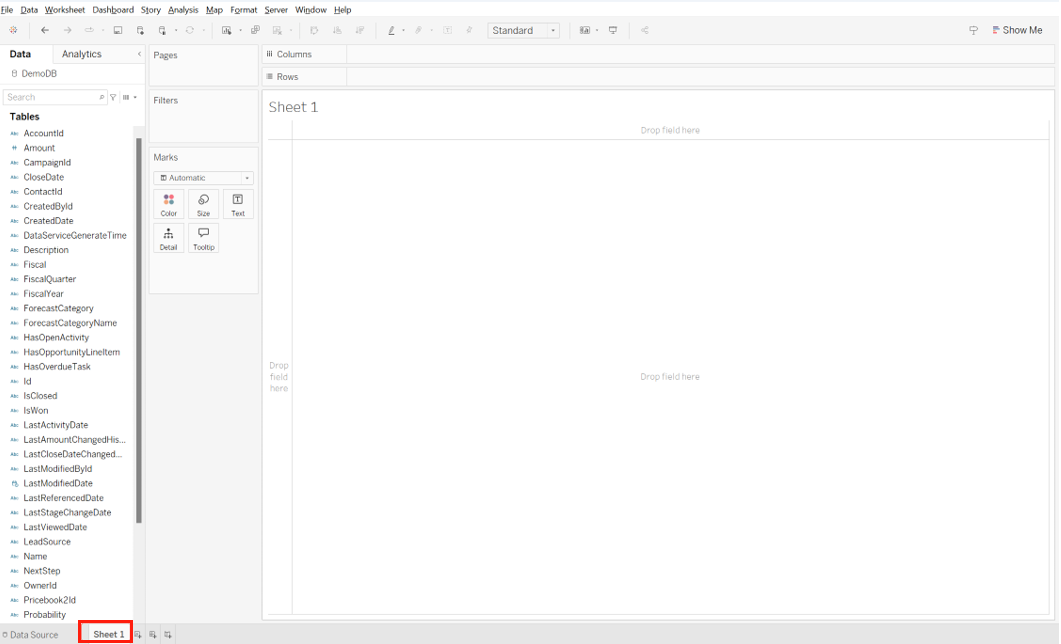
Click Sheet 1 at the bottom to open the sheet.
-
-
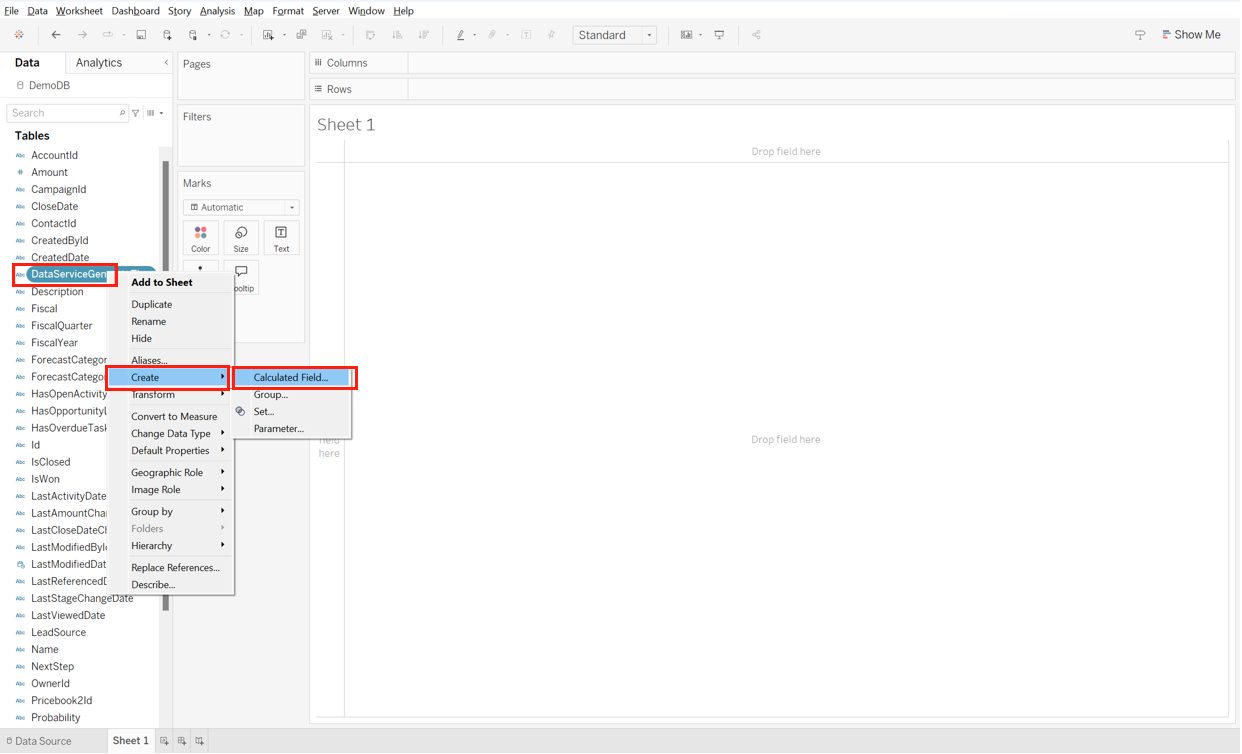
In the Tables pane, right-click DataServiceGenerateTime and select Create > Calculated Field….
-
-
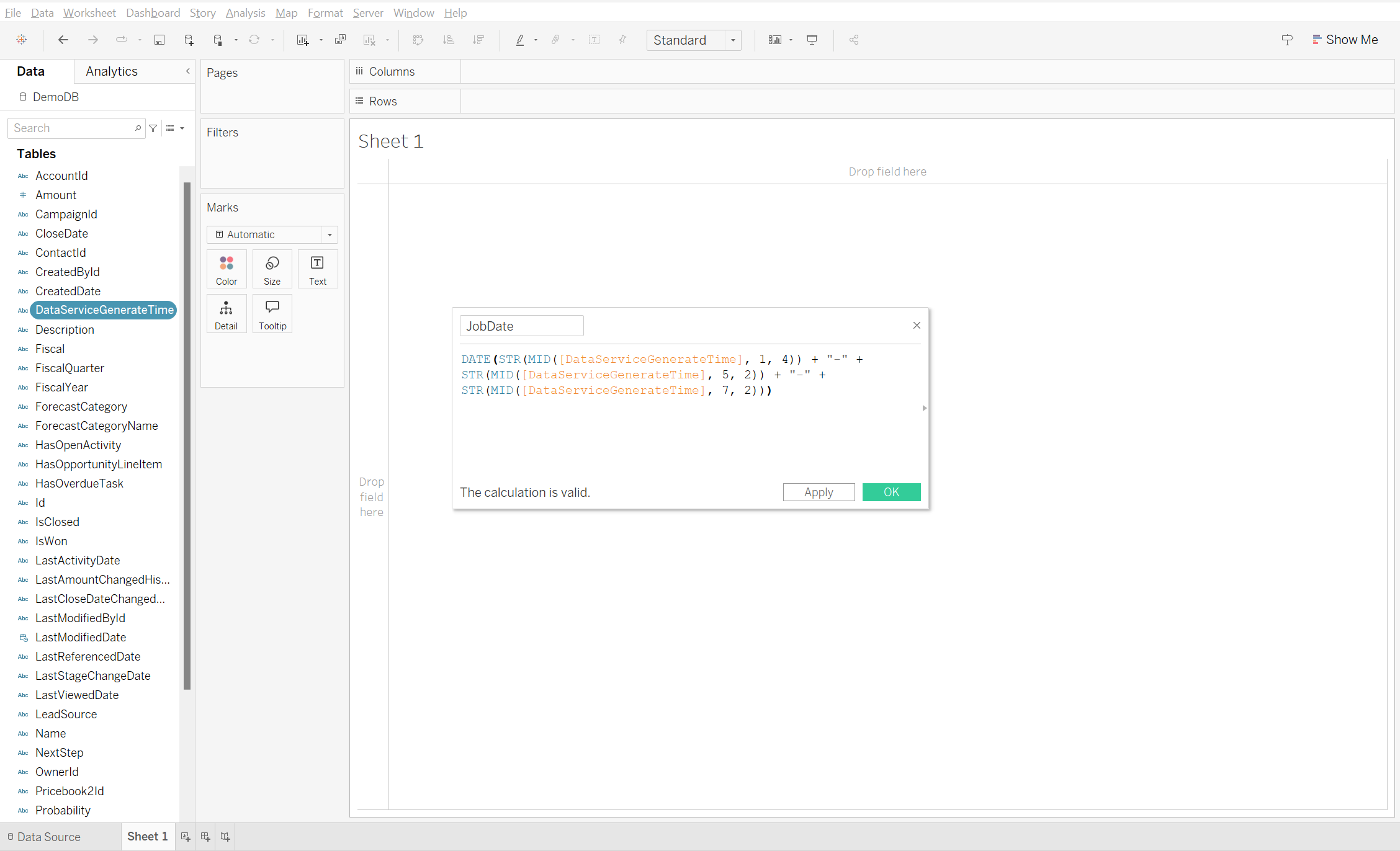
In the pop-up field, change the name to JobDate and enter the following calculation in the text box to change the format to Date. Then click OK.
-
DATE(STR(MID([DataServiceGenerateTime], 1, 4)) + "-" +
-
STR(MID([DataServiceGenerateTime], 5, 2)) + "-" +
-
STR(MID([DataServiceGenerateTime], 7, 2)))
-
-
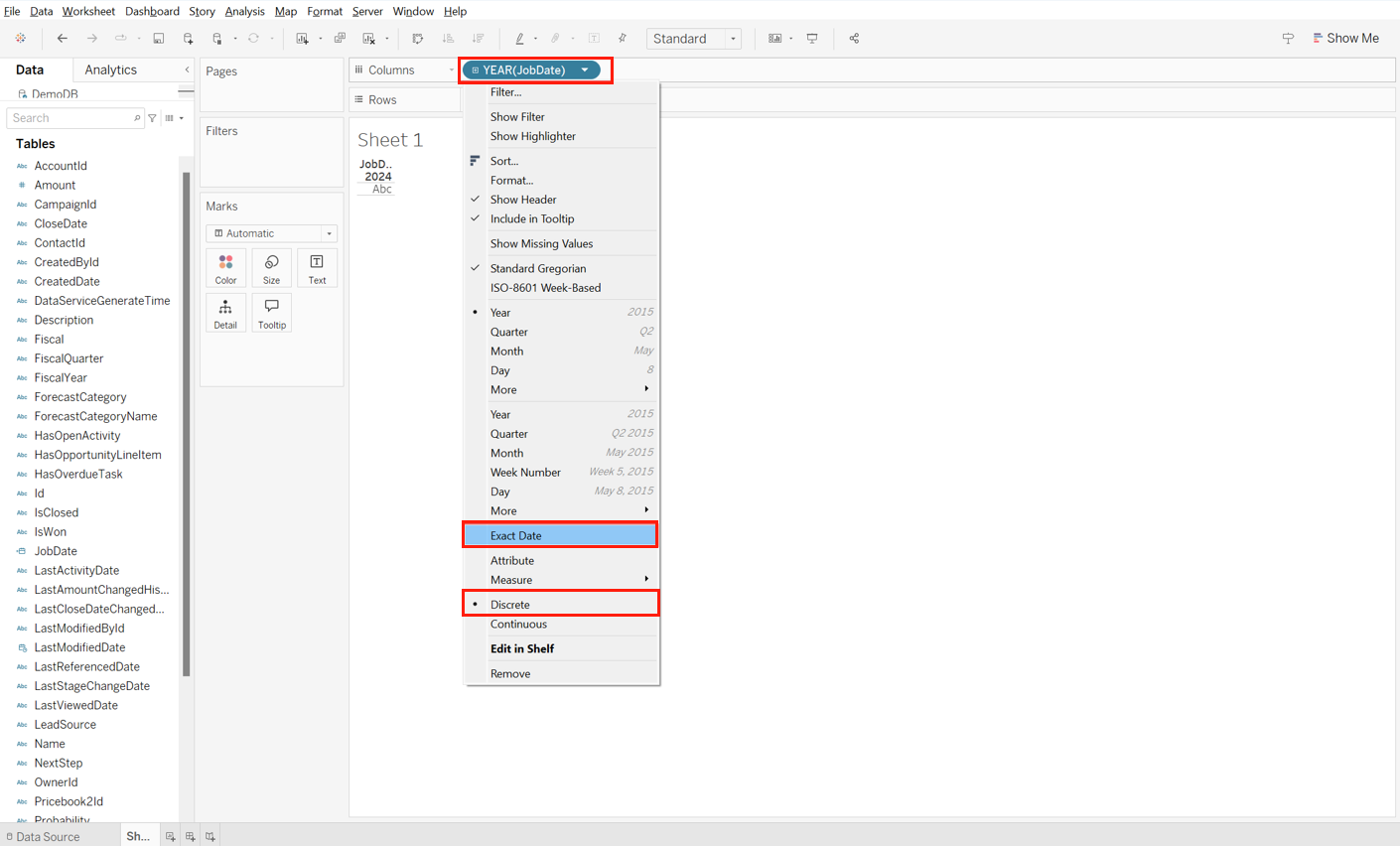
Drag the JobDate table to the Columns field. Next, click the drop-down arrow of JobDate in the Columns field and select Exact Date. Then click JobDate again to select Discrete.
-
-
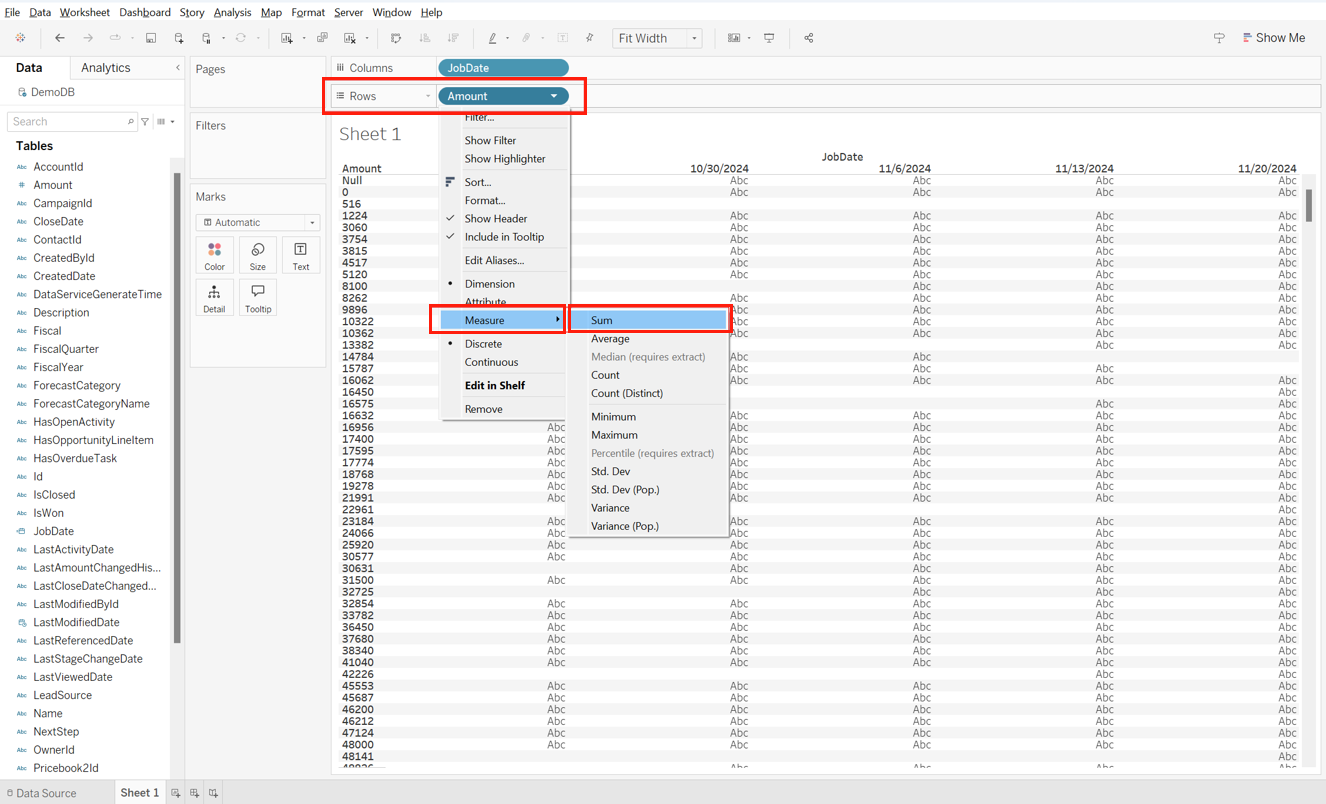
Drag the Amount table to the Rows field*.* Then click the drop-down arrow of Amount in the Rows field and select Measure > Sum.
-
-
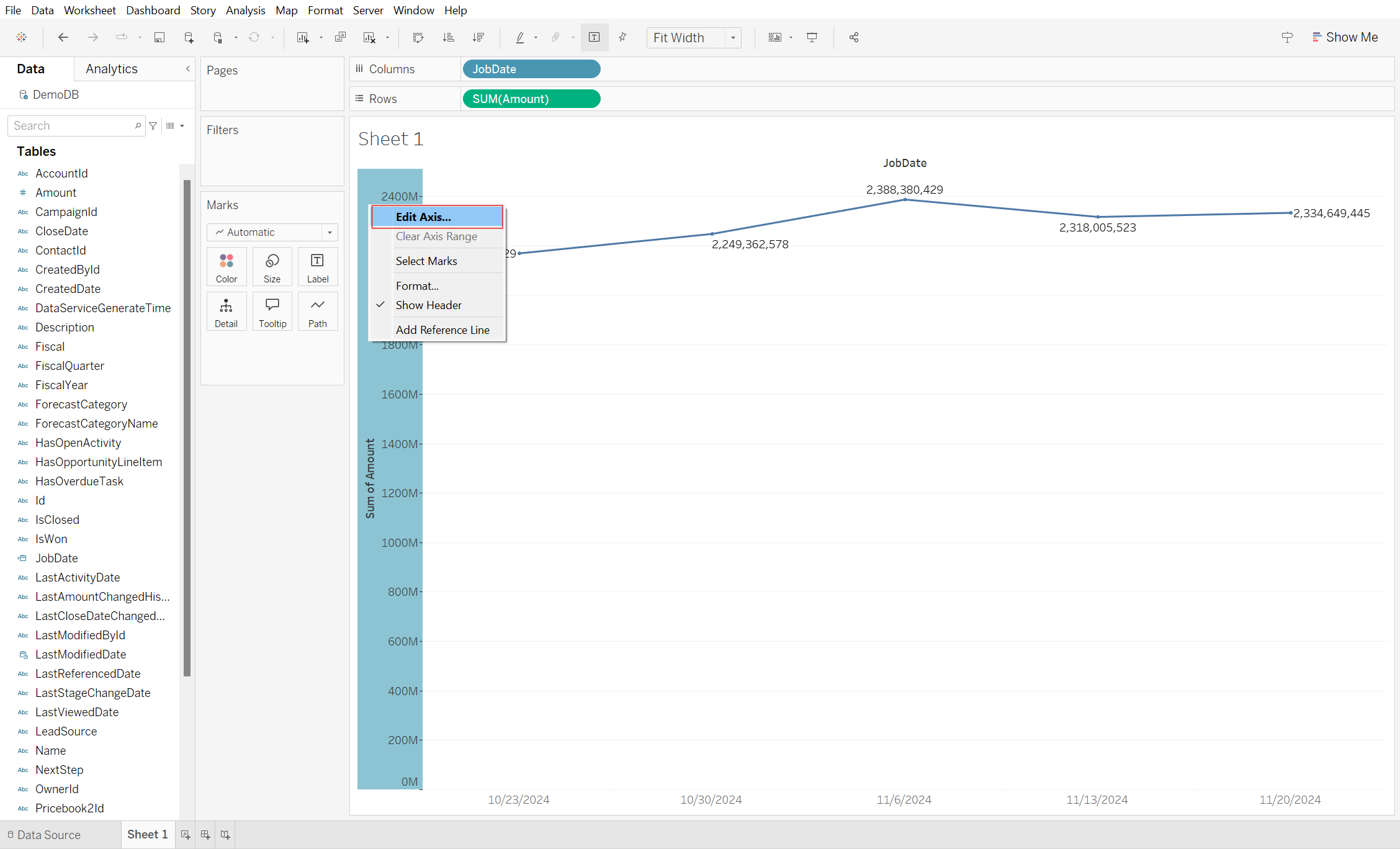
Right-click the axis and select Edit Axis….
-
-
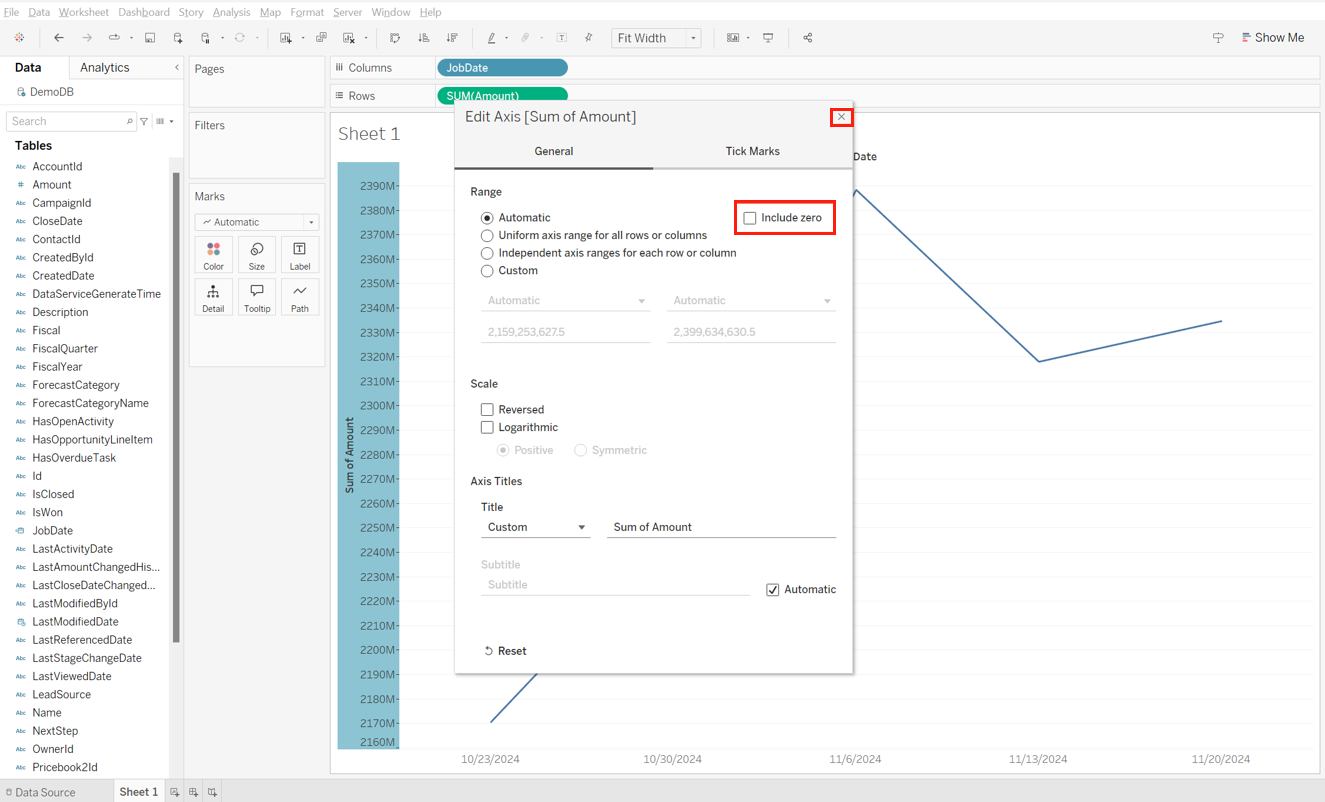
In the pop-up window, uncheck Include zero and then click × to close the window.
-
-
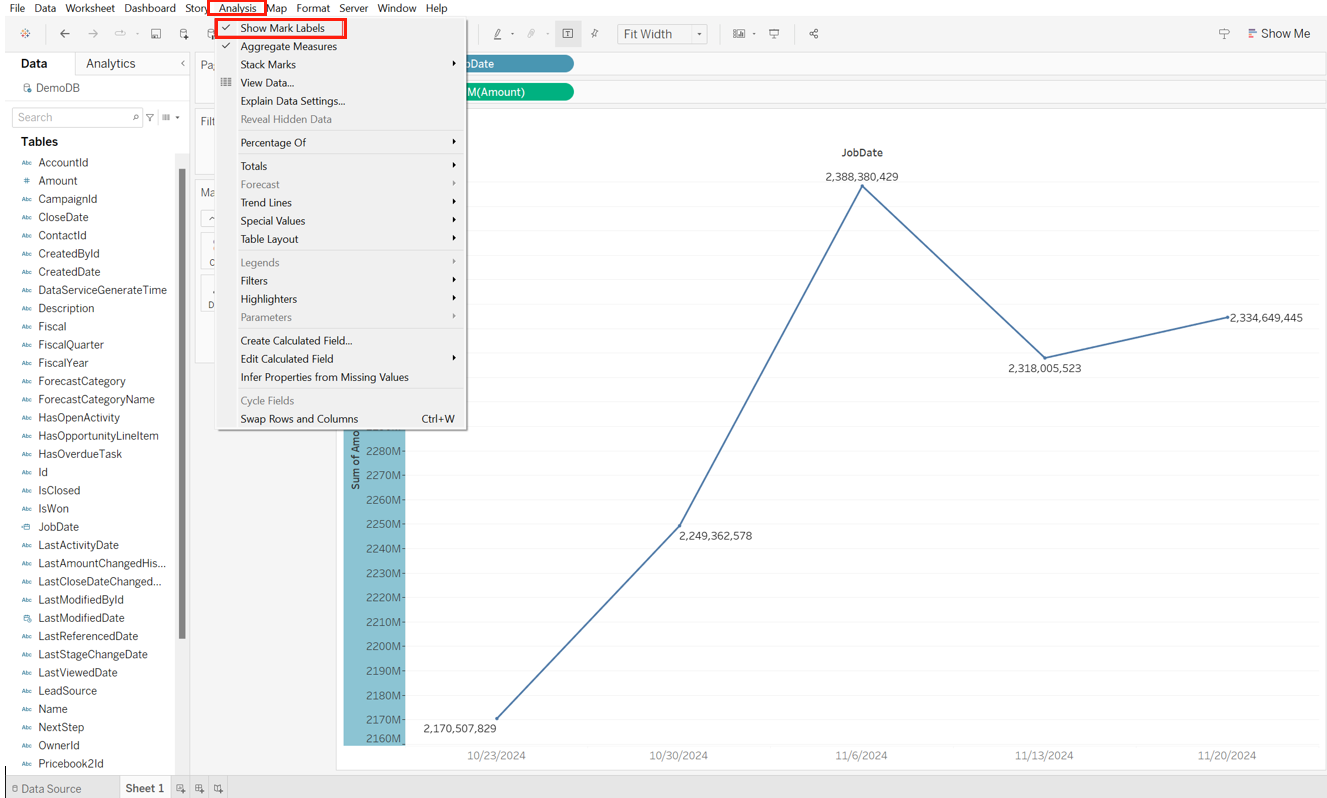
In the ribbon, click the Analysis tab and select Show Mark Labels to enable data labels.
-
-
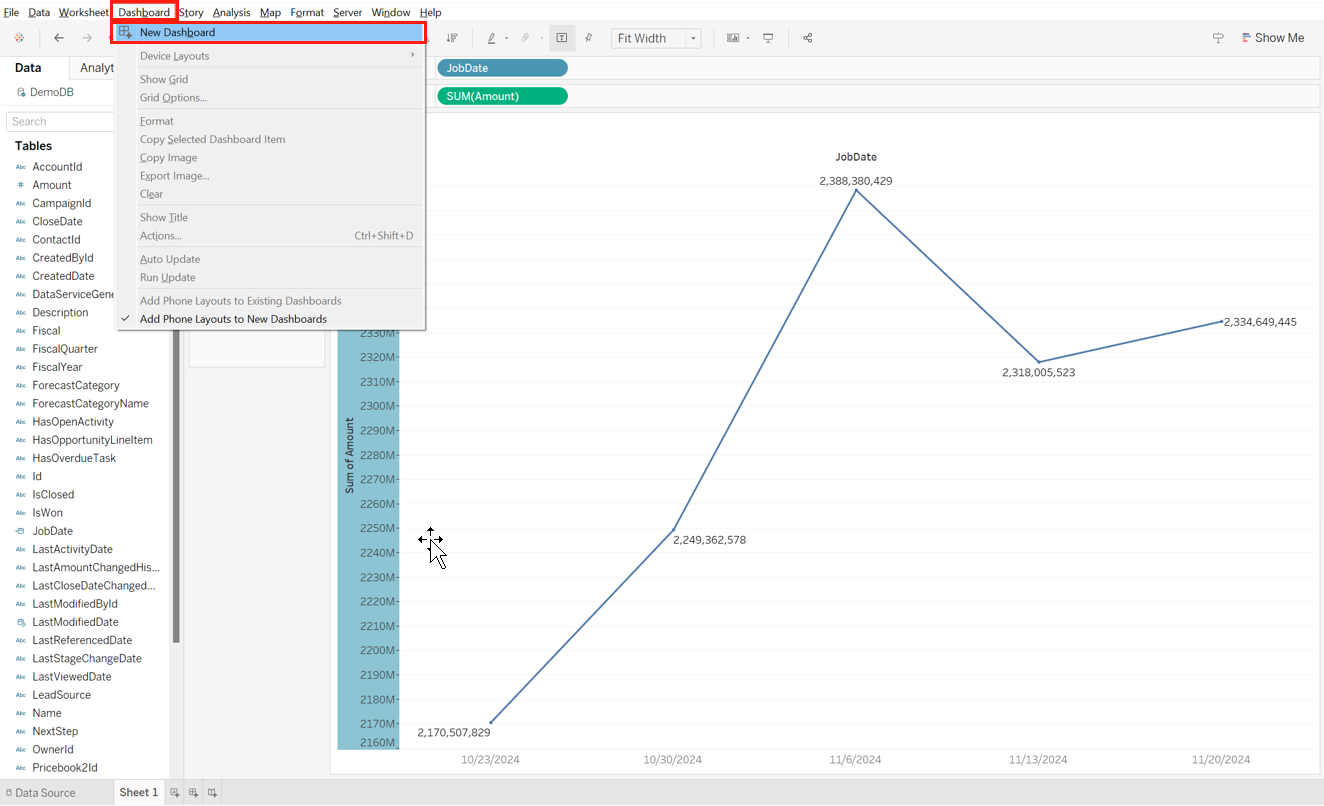
Click the Dashboard tab and select New Dashboard.
-
-
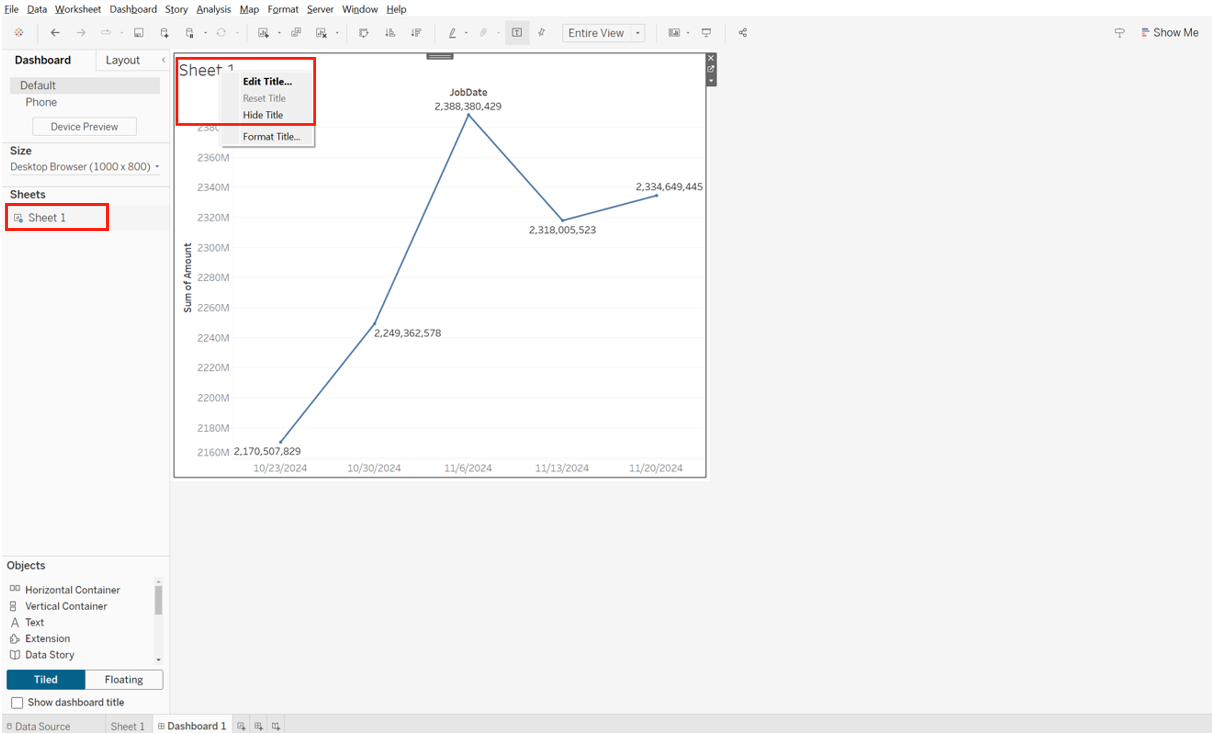
In the new dashboard, drag Sheet 1 in the Sheets section to the new dashboard. Right-click Sheet 1 in the new dashboard to Edit Title or Hide Title.
-
-
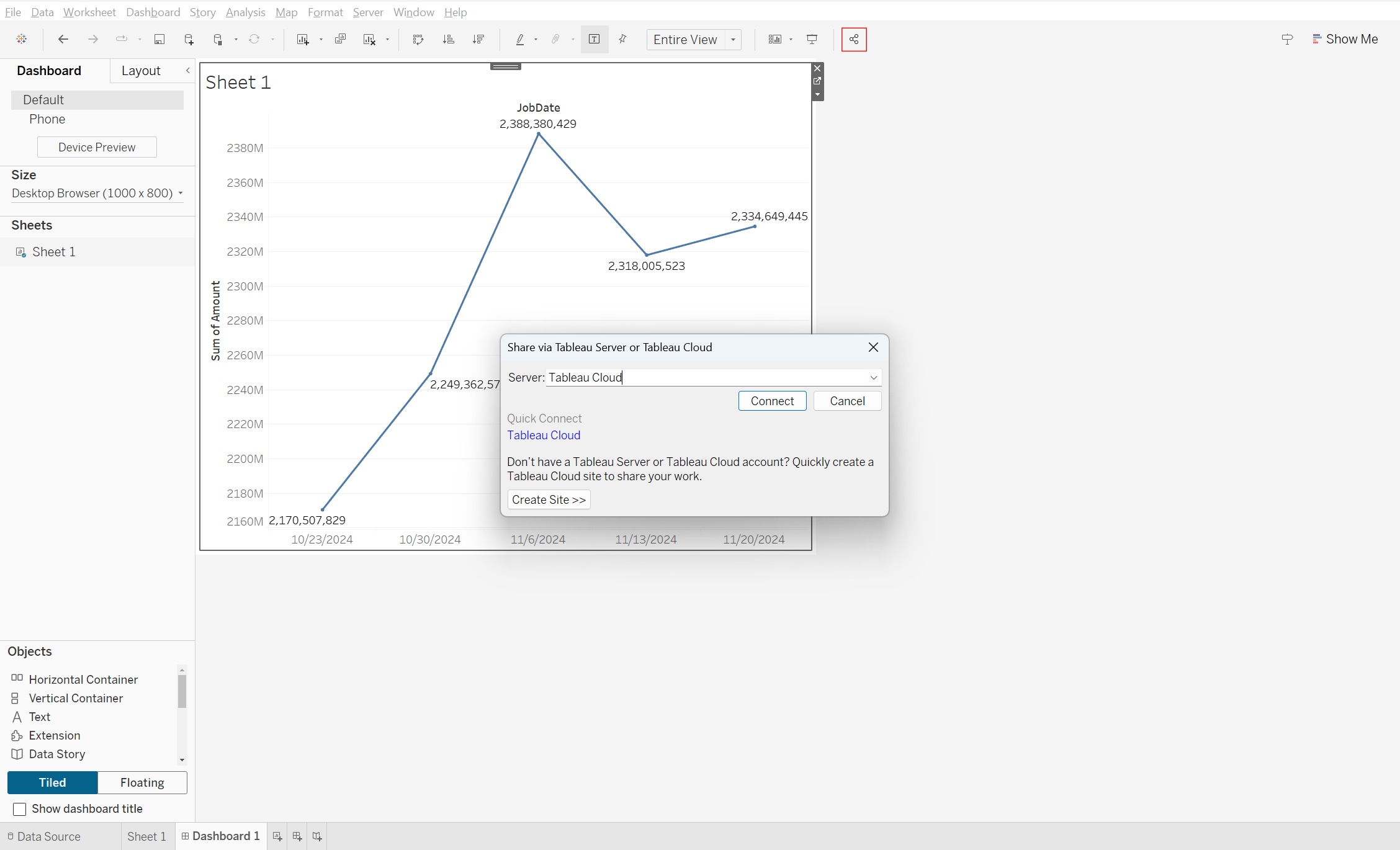
Click the Share Workbook With Others icon to publish the dashboard to Tableau Cloud. Tableau Cloud account, password and Tableau site URL are required to connect to Tableau Cloud.
-
-
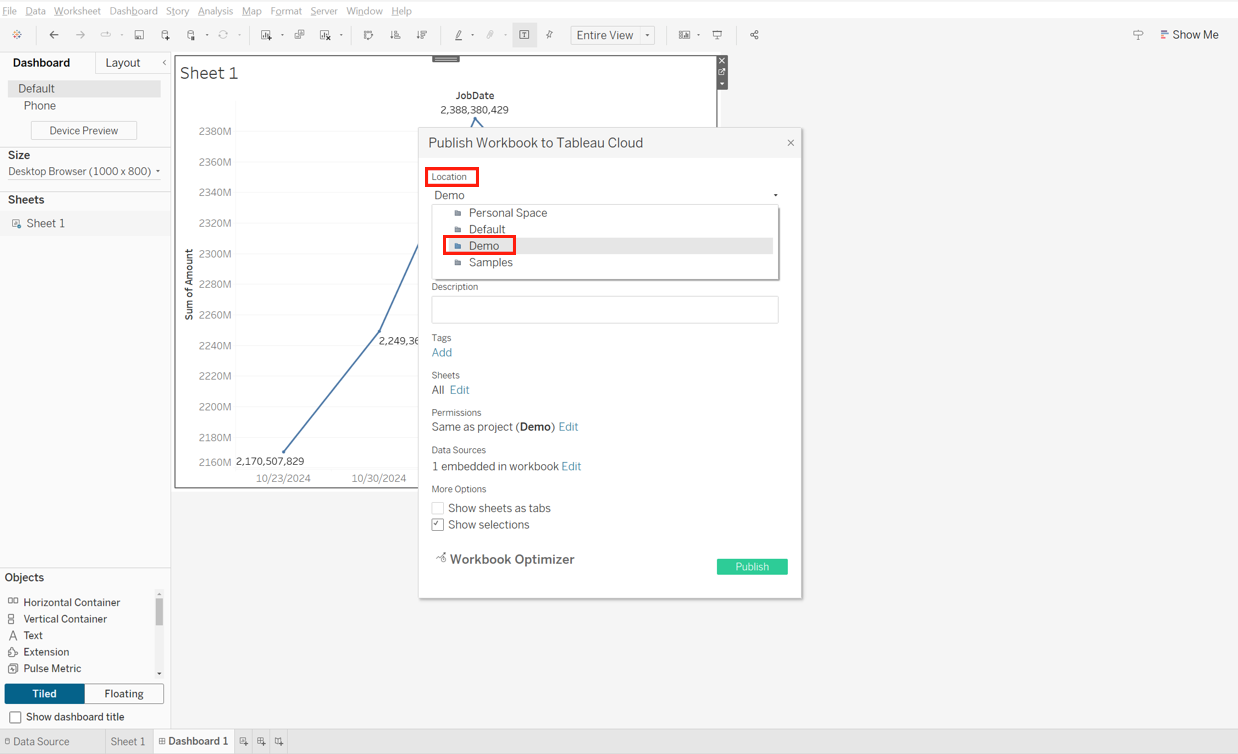
In the Location field, select the project.
-
-
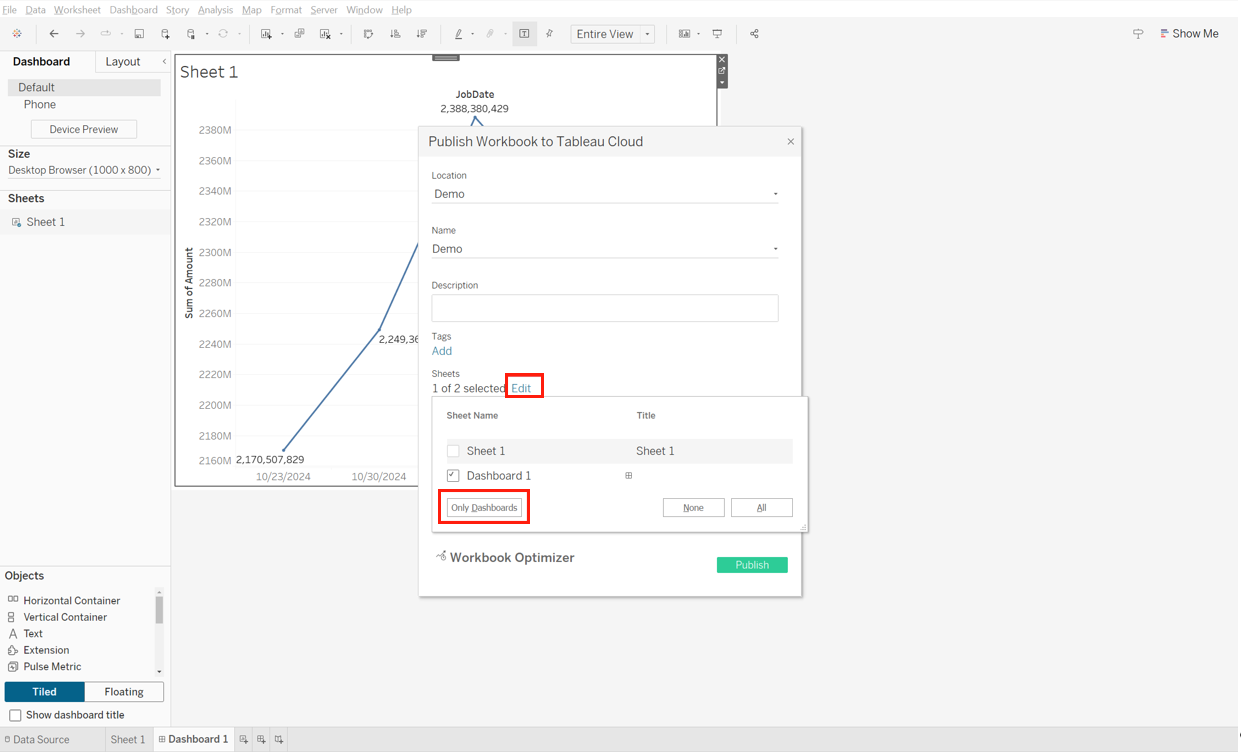
In the Sheets section, click Edit **and select Only Dashboards.
-
-
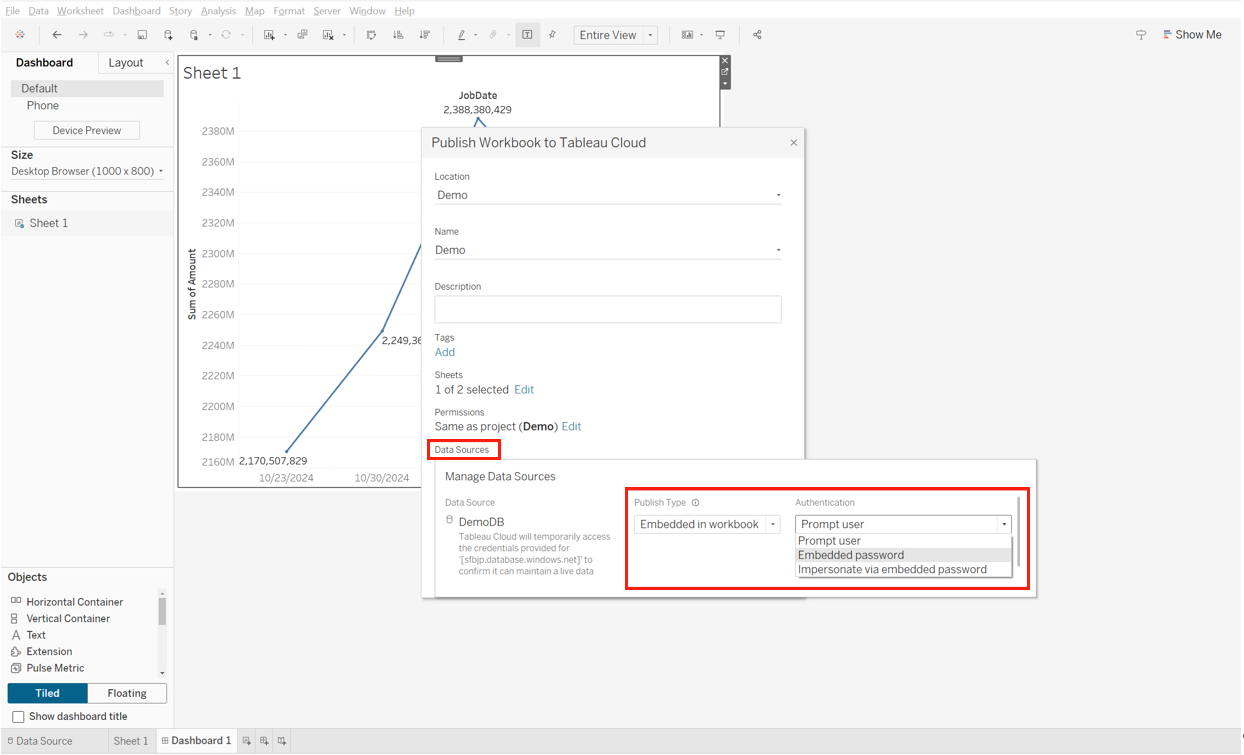
In the Data Sources section, click Edit. Then select Embedded in workbook for Publish Type and Embedded password for Authentication.
-
-
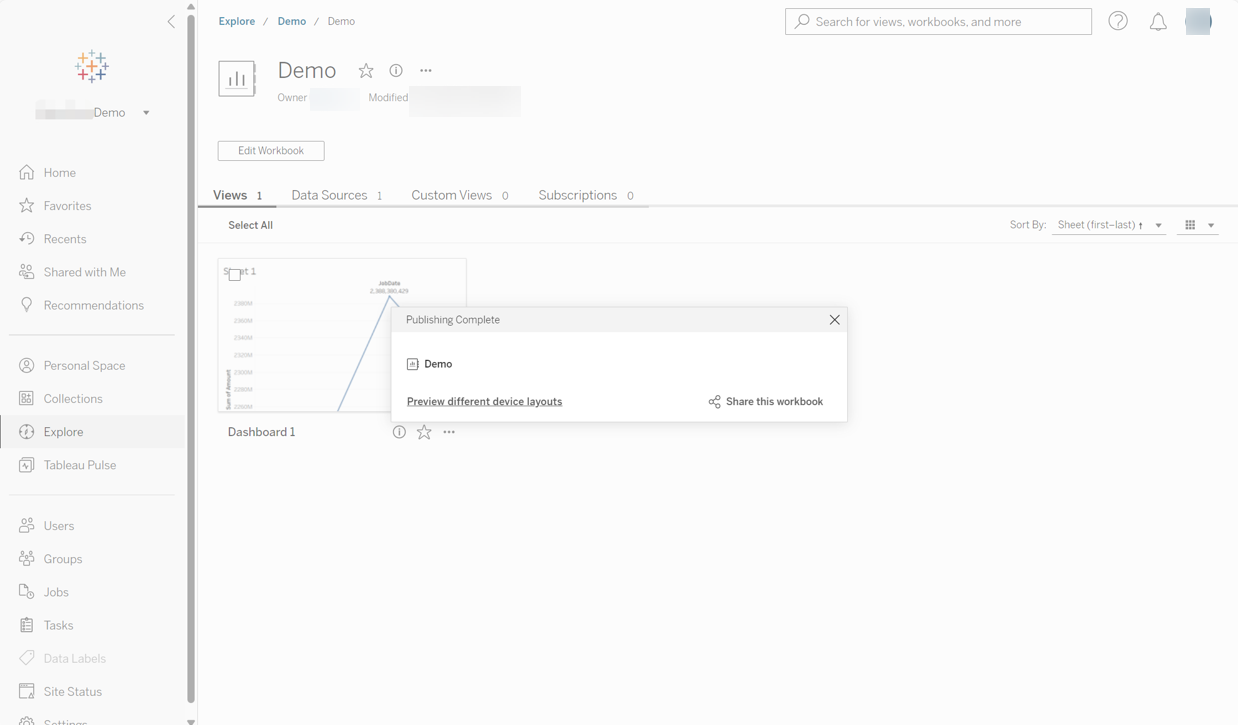
Click Publish and you will be redirected to Tableau Cloud.
-