Home > App Suite > Vehicle Reservation > Settings for Vehicle Reservation App

Download this article
お知らせ: このページは現在英語のみで提供されています。日本語版は準備中です。ご不便をおかけして申し訳ございません。

Settings for Vehicle Reservation App

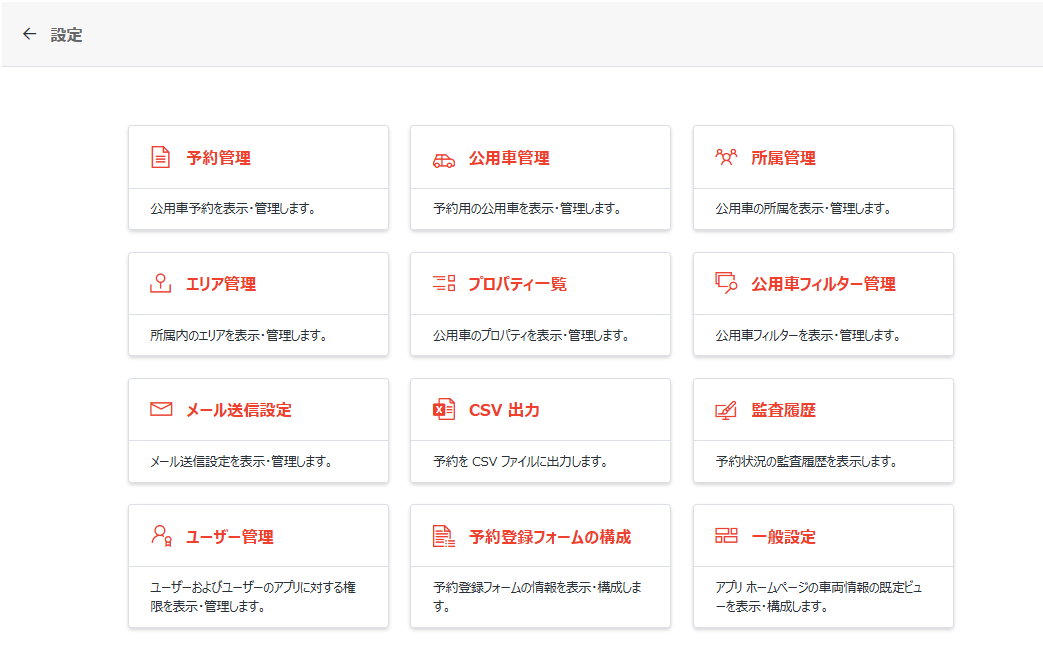
On the Settings page, authorized users can configure the following settings for the vehicle reservation app:

NOTE

Users can only view and configure the settings to which they have permissions.

The Settings page.

Reservation Management

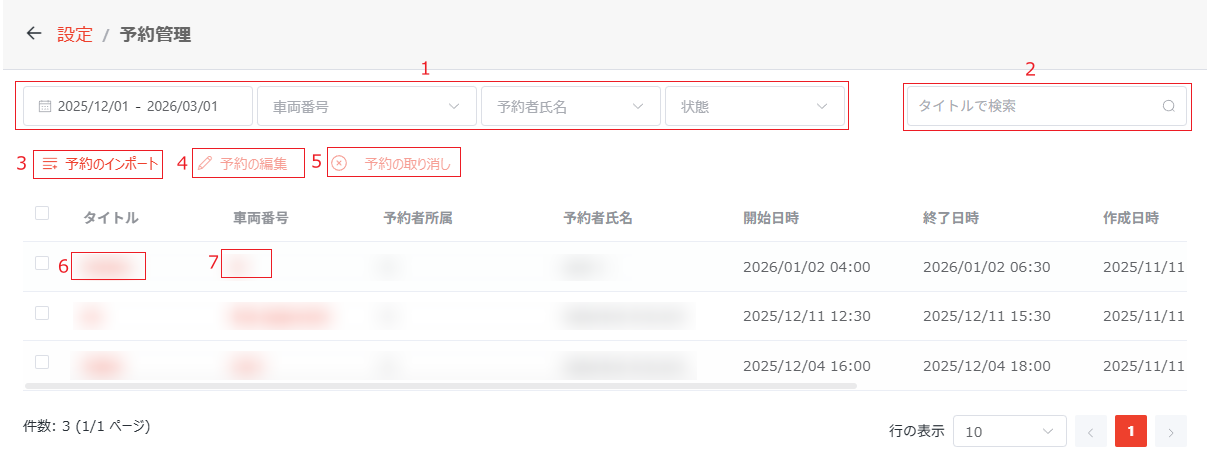
Click the Reservation Management tile on the Settings page, and the Reservation Management page appears. On this page, you can view and manage vehicle reservations to which you have permission. The following actions are available:

Reservation Management.

  1. Filter Reservations – You can filter reservations by period, vehicle number, “Reserve For” user, and reservation status using the filters in the upper-left corner of the table. To clear a filter, click the clear button next to the filter condition.

  2. Search Reservations – Use the search box in the upper-right corner of table to search reservations by title.

  3. Import Reservations – Click Import Reservations. In the Import Reservations window, click download the template to download the template. After adding the reservation information to the template and saving the file, return to the Import Reservations window and either drag and drop the file or click browse to upload it. Once uploaded, the vehicle reservations from the file will be imported directly into the table.

    NOTE
    • Reservations that require approval will be automatically approved during the import process.
    • It may take some time to import more than 500 reservations. You’ll receive an email notification with the import results upon completion.
    • You can only import reservations for departments to which you have permission.
  4. Edit Reservation – Select a reservation and click Edit Reservation, or click the title link to edit the reservation in the registration panel. Then, save your edits when you finish.

  5. Cancel Reservation – Select one or more reservations and click Cancel Reservation above the table.

  6. View Reservation Details – Click the title link to access the reservation registration panel, where the reservation details are displayed. If necessary, you can update the reservation details or cancel this reservation in the panel.

    NOTE

    The reservation stage displayed in the registration panel varies with the reservation status. You can switch among stages to view and update the corresponding details.

  7. View/Edit vehicle information – Click the vehicle number link to view the detailed information of the reserved vehicle. If necessary, you can click Edit to edit the vehicle information.

Vehicle Management

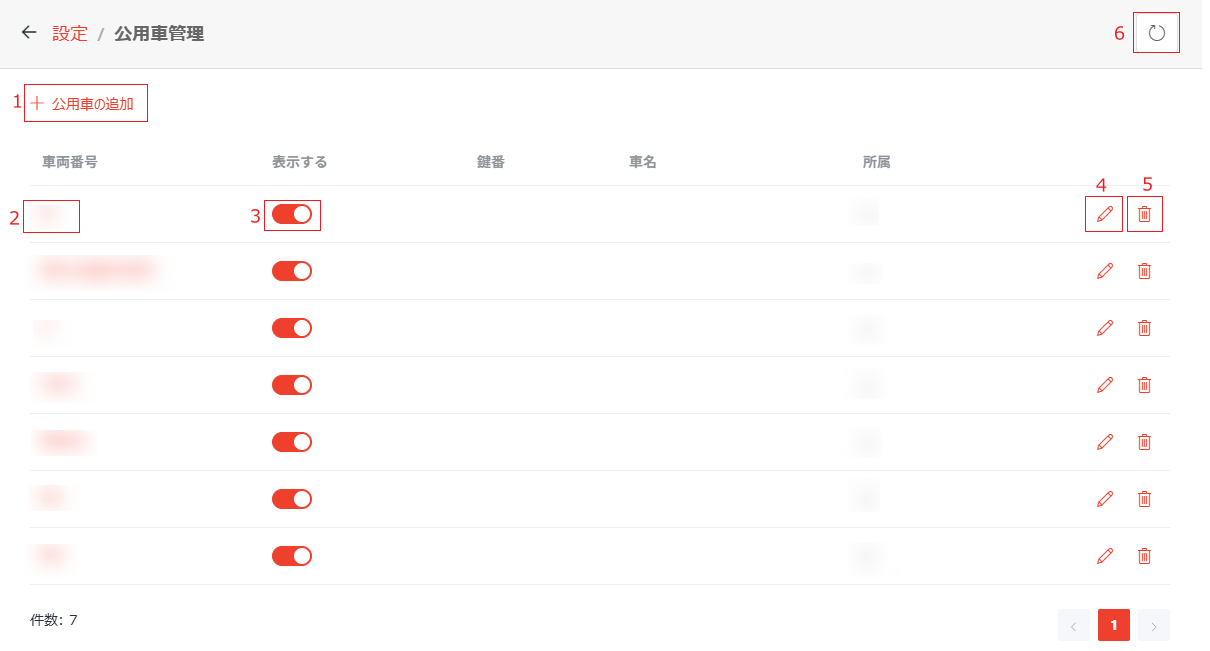
Click the Vehicle Management tile on the Settings page, and the Vehicle Management page appears. On this page, you can view the information of the vehicles that you have permissions to manage, including the vehicle number, key ID, vehicle name, and the department and area to which the vehicle belongs. The following actions are available:

Vehicle Management.

  1. Add Vehicles – Click Add Vehicle on the top of the page, and the Add Vehicle window appears on the right pane. Fill in the fields and click Save to add the vehicle.

  2. View Vehicle Information – Click the desired vehicle number link to view the vehicle information in the Vehicle Information window that appears on the right pane.

  3. Update Vehicle Display Setting – Turn on/off the Available for Reservation toggle to determine whether this vehicle is available for end users to reserve.

  4. Edit Vehicle Information – Click the edit button to the right of the vehicle of which you want to edit the information. The Add Vehicle window appears on the right pane. Edit the fields in this window and click Save.

  5. Delete Vehicles – Click the delete button to the right of the vehicle that you want to delete to delete the vehicle.

  6. Refresh – Click the refresh button in the upper-right corner of the page to refresh the vehicles displayed on this page.

Department Management

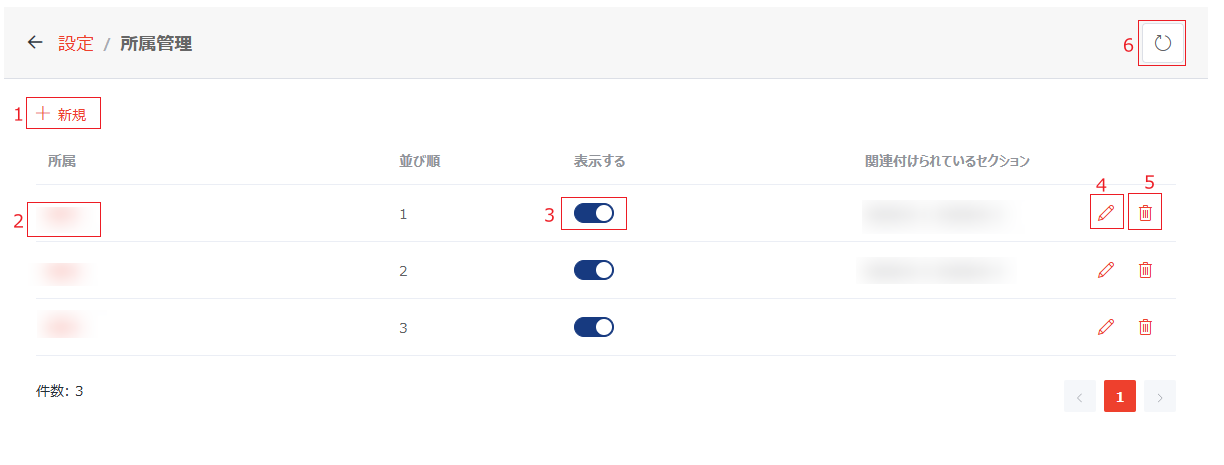
Click the Department Management tile on the Settings page, and the Department Management page appears. On this page, you can view the information of the department that you have permissions to manage, including the department name, display order, display setting, and associated areas. The following actions are available:

Department management.

  1. Add Departments – Click Add Department on the top of the page, and the Add Department window appears on the right pane. Fill in the fields and click Save to add the department.

  2. View Department information – Click the department link to view the department details in the Department Details window that appears on the right pane.

  3. Update Settings for Available for Reservation – Turn on/off the toggle to enable or disable display for this department. Once the setting is disabled, all areas and vehicles of the department will be hidden from the Registration panel.

  4. Edit Department Details – Click the edit button to the right of the department of which you want to edit the details. The Add Department window appears on the right pane. Edit the fields in this window and click Save.

  5. Delete Departments – Click the delete button to the right of the department that you want to delete to delete the department.

    NOTE
    • This is only available for App Administrators.

    • The departments will not be able to be deleted if any vehicles in the departments have ongoing or future reservations. Delete these reservations or remove the vehicles with ongoing or future reservations from the departments before deleting the departments.

  6. Refresh – Click the refresh button in the upper-right corner to refresh the departments displayed on this page.

Area Management

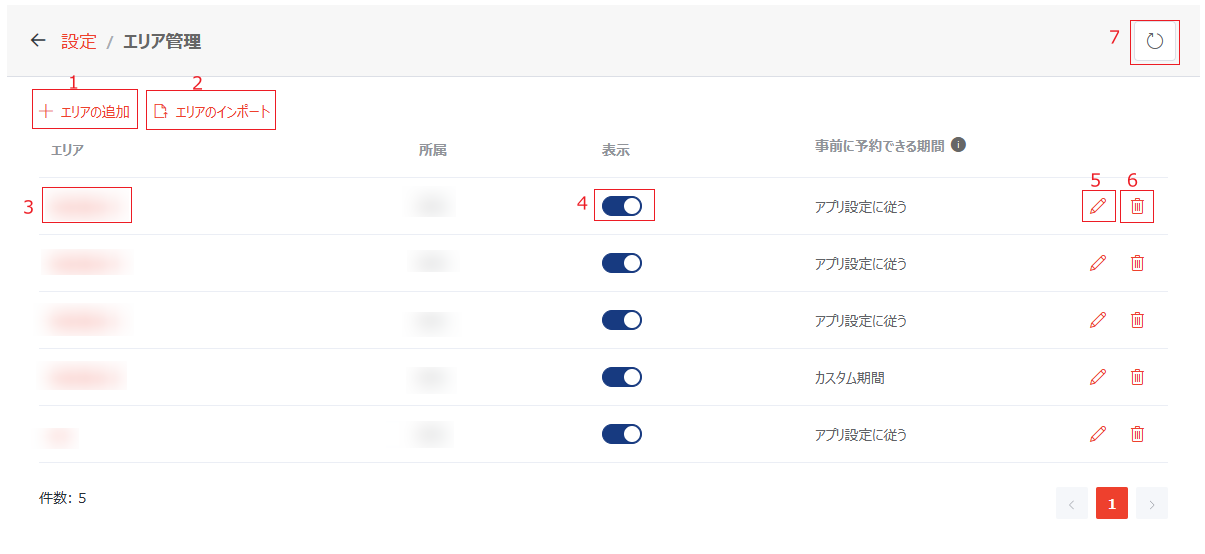
Click the Area Management tile on the Settings page, and the Area Management page appears. On this page, you can view the information of areas to which you have permission, including the area name, department to which the area belongs, display setting, and the area-specific date range for reservation. The following actions are available on the page.

NOTE

The Area Management functionality is only available when the Enable Area Level for Department setting is enabled in General Settings.

Area Management.

  1. Add Area – Click Add Area. In the Add Area panel, complete the following information and then click Save to create the area.

    NOTE

    Up to 4800 areas can be added. Once the limit has reached, the Add Area button will be grayed out, preventing new areas to be created.

    • Area – Enter a name for the area.

    • Department – Select the department to which the area will be added. Note that the selected department cannot be changed once the area is created.

    • Visible for End Users – Select Yes or No to display or hide the area from end users. If No is selected, vehicles in this area will also be hidden from end users.

    • Display Order – Enter the display order of this area.

    • Area Administrator – Area administrators are responsible for maintaining the area and its associated vehicle information and managing reservations within the area, but they cannot create or delete areas or vehicles. To assign a user with the area administrator role, enter the name or email address of the user and select the user from the suggestion list. You can assign multiple area administrators.

    • Additional Area Administrative Roles – Additional area administrative roles include area vehicle administrator and area reservation administrator.

      • Area Vehicle Administrator – Area vehicle administrators can edit information of vehicles in this area. Department vehicle administrators who retain full control over all vehicles across the entire department, including this area, are auto-populated and read-only. You can still assign area-specific vehicle administrators for dedicated management.

      • Area Reservation Administrator – Area reservation administrators can manage all reservations in this area. Department reservation administrators who retain full control over all reservations across the entire department, including this area, are auto-populated and read-only. You can still assign area-specific reservation administrators for dedicated management.

      To assign the area-specific role to users, enter the name or email address of the user in the corresponding field and select the user from the suggestion list. You can add multiple users for each role.

      To remove an added user, click the remove button next to them.

      To remove all added users, click Remove Custom Additional Area Administrators.

    • Area Reservation Setting – The reservation date range for this area defines how long in advance end users can submit reservations for vehicles in this area. You can choose from the following options:

      • Follow Date Range in User Management – Follows the Date Range for Reservation setting configured for users with short-term/long-term reservation permissions in User Management.

      • Customize Date Range for Reservation – With this option selected, define the area-specific date range for users with short-term/long-term reservation permissions

        NOTE

        When reserving a vehicle within this area, the date ranges set here for users with short-term/long-term reservation permissions take precedence over the date range for reservation settings in User Management.

  2. Import Areas – Click Import Areas. In the Import Areas window, click download the template to download the template. After adding the area information to the template and saving the file, return to the Import Areas window and either drag and drop the file or click browse to upload it. Once uploaded, the areas from the file will be imported directly into the table.

  3. View Area Information – Click the area name link to view the area information in the Area Information panel.

  4. Update Display Setting – Turn on/off the Visible for End Users toggle to display or hide this area from end users.

  5. Edit Area Information – Click the edit button to the right of the area and the Edit Area window appears. Edit the fields in the window and click Save to save your edits.

  6. Delete Area – Click the delete button to the right of the area to delete it.

  7. Refresh Areas – Click the refresh button in the upper-right corner of the page to refresh the areas displayed on this page.

Vehicle Property Management

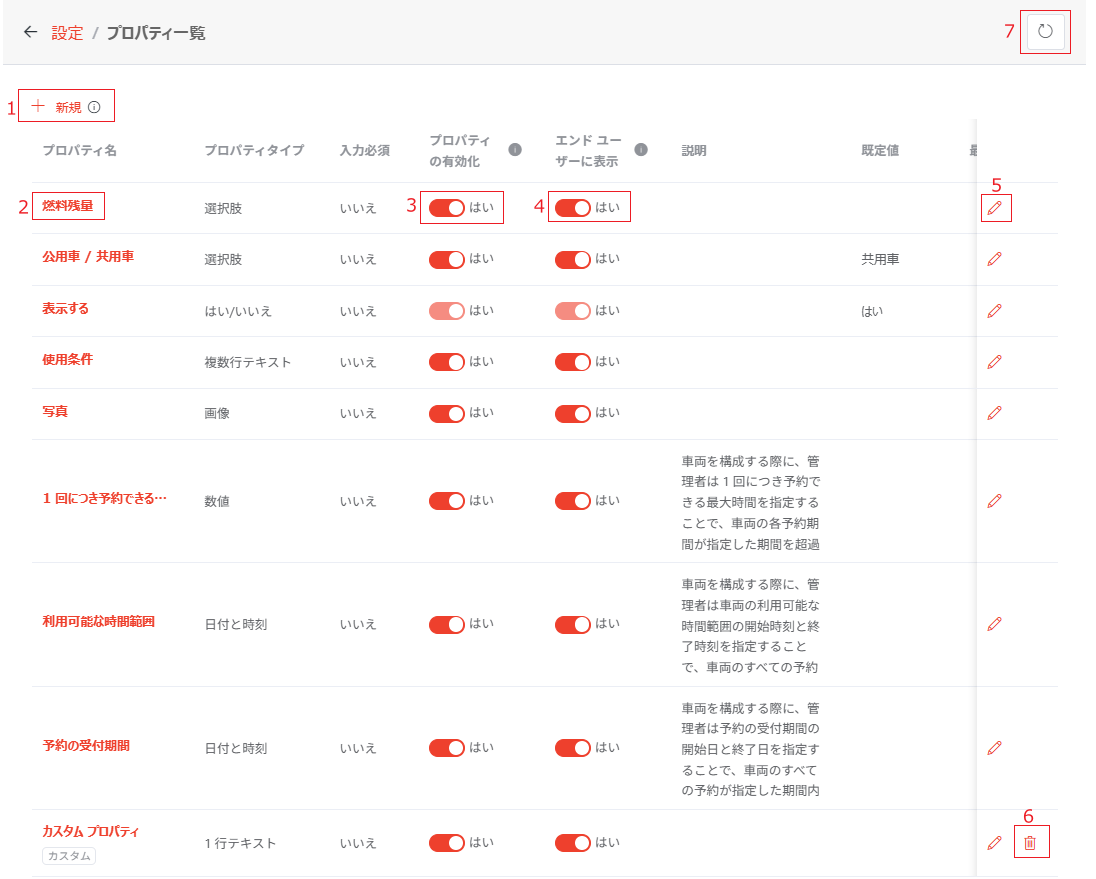
Click the Vehicle Property Management tile on the Settings page, and the Vehicle Property Management page appears. On this page, you can view the information about vehicle properties, such as the property name, type, whether the property is enabled and visible for end users. The following actions are available:

Property Management.

  1. Add Custom Properties – Click Add Property on the top of the page, and the Add Property window appears on the right pane. Fill in the fields and click Save to add the property.

    NOTE

    A maximum of 50 properties is allowed for this app. When the limit is reached, the Add property button will be greyed out and not clickable.

  2. View Property Information – Click the property name link to view the property information in the Property Information window that appears on the right pane.

  3. Enable Property – Turn on/off the Enable Property toggle to determine whether the property is enabled and available on administrative pages such as Vehicle Management and Auditor.

  4. Update Property Display Setting – Turn on/off the Visible for End Users toggle to determine whether the property is displayed on user-facing pages, such as the homepage, registration form, and My Reservations.

    NOTE
    • The Enable Property and Visible for End Users settings for some properties cannot be changed.

    • When the Enable Property toggle is turned off, the property is hidden from all pages, and its corresponding functionality is disabled. For example, if the Approval Required for Reservations property is disabled, administrators on longer need to configure whether approval is required to reserve a vehicle and no approval will be required when end users make vehicle reservations.

    • When the Enable Property toggle is turned on, you can turn on/off the Visible for End Users toggle to determine whether the property is also available for end users. If turned off, the Visible for End Users setting is disabled and locked.

  5. Edit Property Information – To edit the property information, click the edit button to the right of the desired property. Then you can edit the values in the Add Property window on the right pane and click Update. Alternatively, you can click Edit in the Property Information window. The Edit Property window appears. Edit the values in this window and click Update.

    Note the following:

    • The editable fields vary with properties. Fields that cannot be edited are grayed out.

    • If this app is already in use and the choices for a Choice type property are updated, administrators and end users need to take the following steps to ensure vehicles with the updated property values are correctly filtered:

      1. Users with vehicle management permissions should modify the affected vehicles to use the new property values, so that end users can filter vehicles using the updated choices.

      2. For end users, to include vehicles with the updated property values, ensure your filters are updated to incorporate the new choices.

  6. Delete Custom Properties – Custom properties are marked with a Custom label under their names. To delete a custom property, click the delete button to the right of it.

    NOTE

    If the property is currently being used in end-user filters, the property filter will also be deleted from these end-user filters once it’s deleted.

  7. Refresh - Click the refresh button in the upper-right corner to refresh the vehicle properties displayed on this page.

Vehicle Filter Management

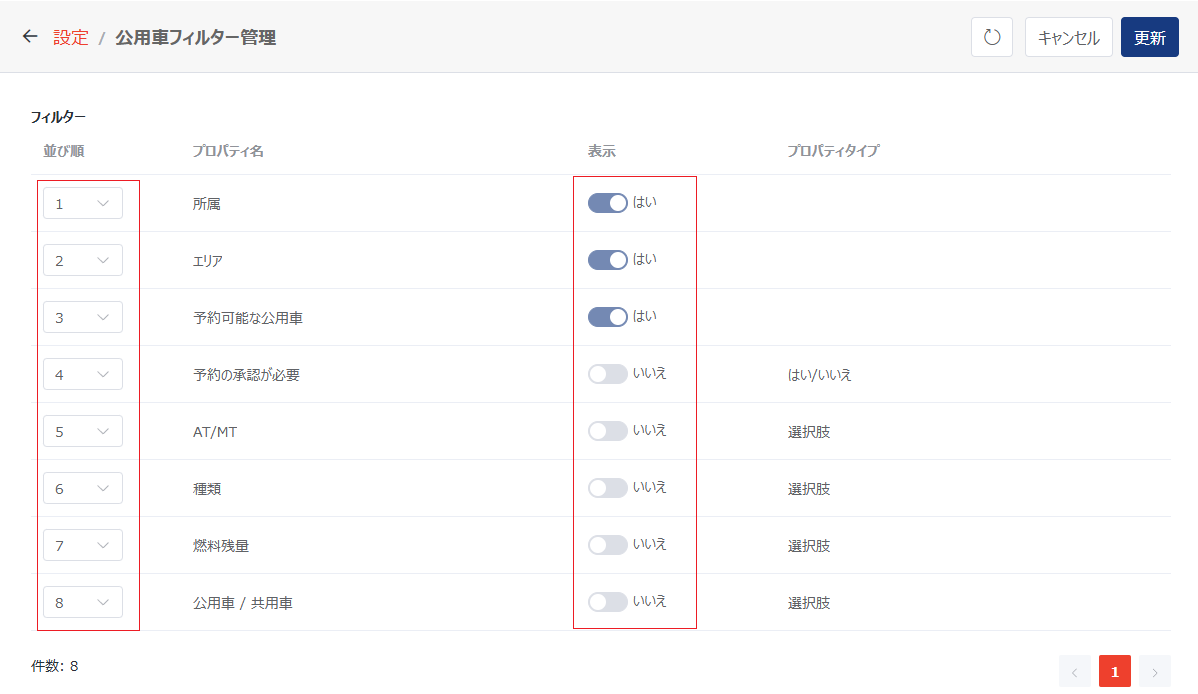
Click the Vehicle Filter Management tile on the Settings page, and the Vehicle Filter Management page appears. On this page, you can view and manage the filters that are used in the Filter window when you search for vehicles on the homepage.

Vehicle Filter Management.

You can edit the display order of a filter in the Filter window by clicking the display order of the desired filter and selecting the desired option from the drop-down list.

Turn on the Visible for End Users switch of a filter to display the filter in the Filter window. If you want to hide a filter from being used in the Filter window, turn off the Visible for End Users of the filter.

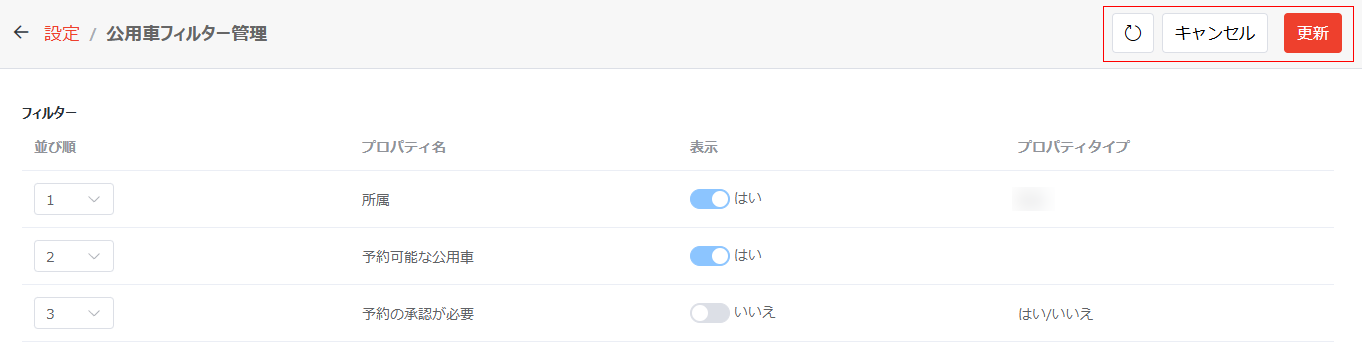
Available actions.

After all necessary configurations are made on this page, click Update in the upper-right corner to update the configurations to the Filter window.

Click the refresh button to refresh the filters displayed on the page.

Email Template Management

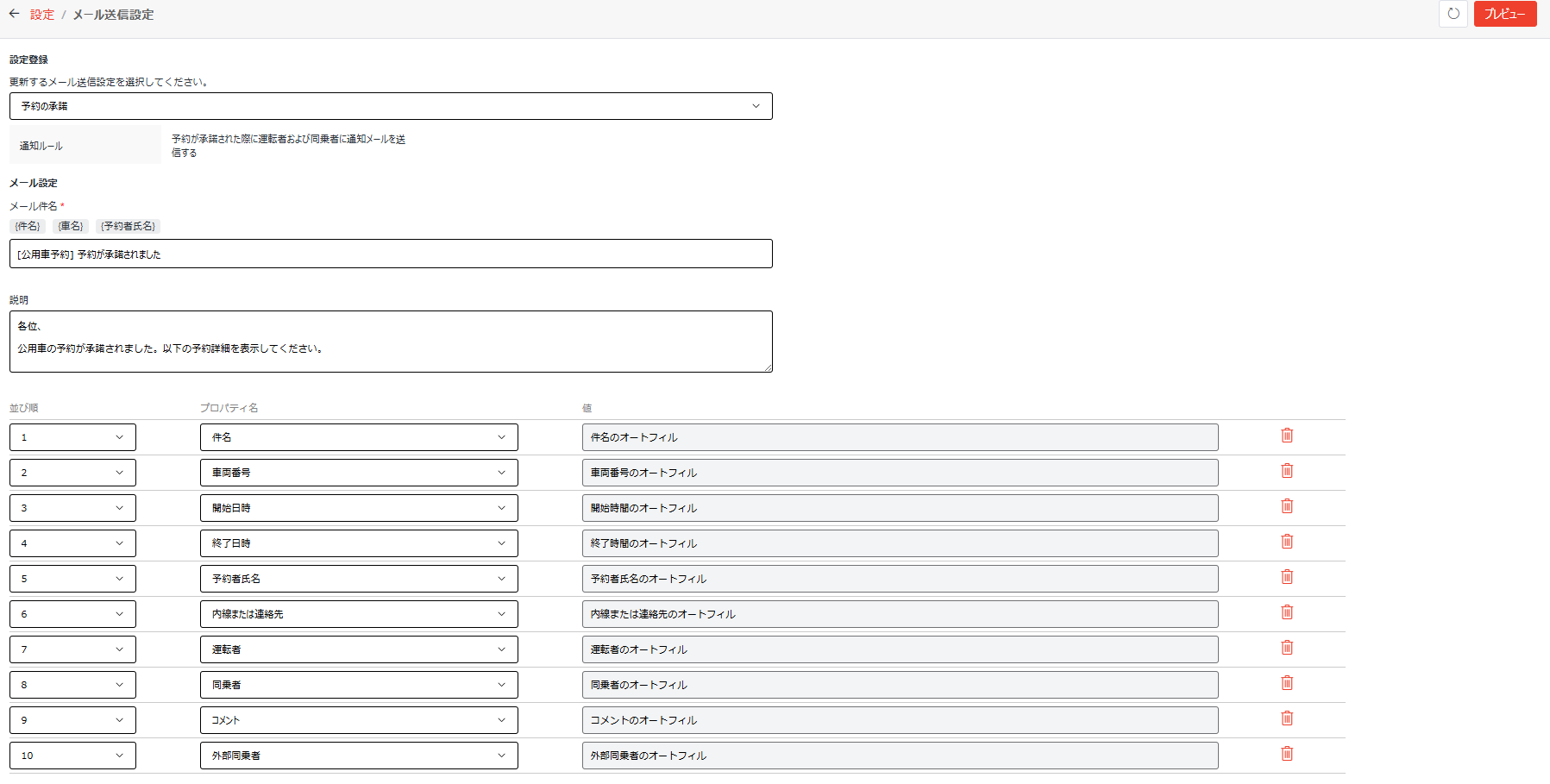
Click the Email Template Management tile on the Settings page, and the Email Template Management page appears. On this page, you can configure the emails to be sent in different reservation stages. Complete the following steps to configure an email template:

Email template management.

  1. In the Select the email template you want to edit field, select the desired email template from the drop-down list. The current email settings for the template are displayed in the viewing pane. You can view when the selected email will be sent in the Notification Rule field.

  2. Under Email Settings, you can edit the following fields:

    • Email Subject – Edit the email subject in the email subject textbox if required. You can add a reference to the email subject by clicking the desired location in the subject and then clicking the desired reference. Multiple references can be added. The reference added will be replaced by the corresponding information in emails.

    • Email Body – Edit the content in the email body text box if required. You can also insert the reservation information to which the email is related in the email body.

      • Display Order – Select the desired display order of the reservation information from the display order drop-down list.

      • Information – Select the desired reservation information from the information drop-down list.

      • Value – The content that was entered and registered for the information will be displayed automatically.

      You can remove the reservation information from the email template by clicking the delete button to the right of the desired information. You can also add the reservation information to the email template by clicking Add Row below the information and configuring the Display Order and Information fields of the information.

      NOTE

      The following information can be inserted to the email template: title, vehicle number, start time for reservation, end time for reservation, reserve for, contact number, driver, passengers, and comments. If all information above has been added, Add Row will be grayed out and you are not allowed to add information anymore.

    • Email Closing – Edit the email closing in the email closing textbox if required.

  3. You can click Preview to preview the email template.

  4. Click Save to save your edits.

Export Reservations to CSV

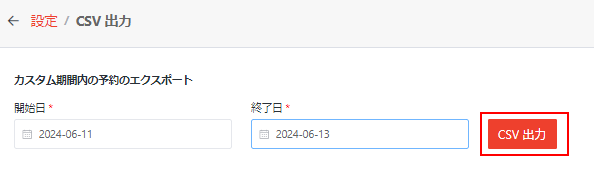
Click the Export Reservations to CSV tile on the Settings page, and the Export Reservations to CSV page appears. On this page, you can customize date ranges and export the reservations of the departments to which you have permissions in the date ranges to CSV files.

  1. Click the Start Date field and select a start date from the calendar.

  2. Click the End Date field and select an end date from the calendar.

  3. Click Export Reservations to CSV to export all reservations in your defined date range to the CSV file.

    Export reservations.

Auditor

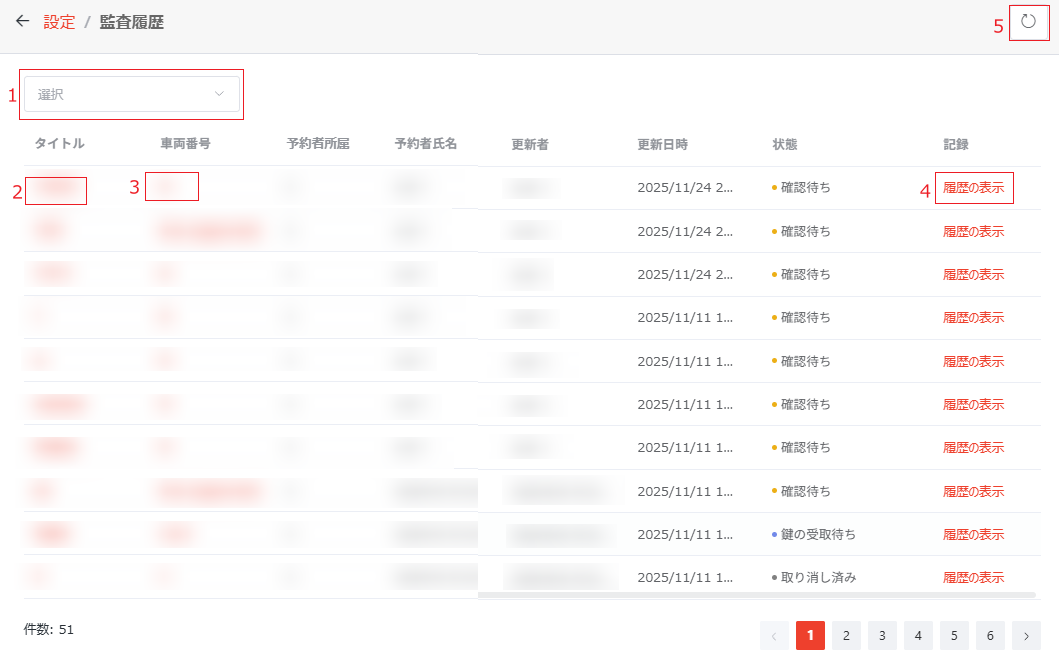
Click the Auditor tile on the Settings page, and the Auditor page appears. On this page, you can view information on all or filtered vehicle reservations, including the vehicle number reserved, the department of the vehicle, the user for whom the vehicle is reserved, the start time and end time for the reservation, the date of the reservation’s last modification, the user who modified the reservation, the reservation status, and the audit records. The following actions are available:

Available actions.

  1. Filter Reservations – Click the Select drop-down list above the reservations and select the desired options to filter the vehicle reservations in the selected statuses. You can click the selected options to deselect the options or click the delete button to the right of the selected options displayed in the field to delete the selection.

  2. View Audit History – Click View History to the right of the vehicle reservations of which you want to view the audit histories. Then you can view the audit histories in the View History window that appears on the right pane.

  3. Refresh – Click the refresh button in the upper-right corner to refresh the vehicle reservations displayed on this page.

User Management

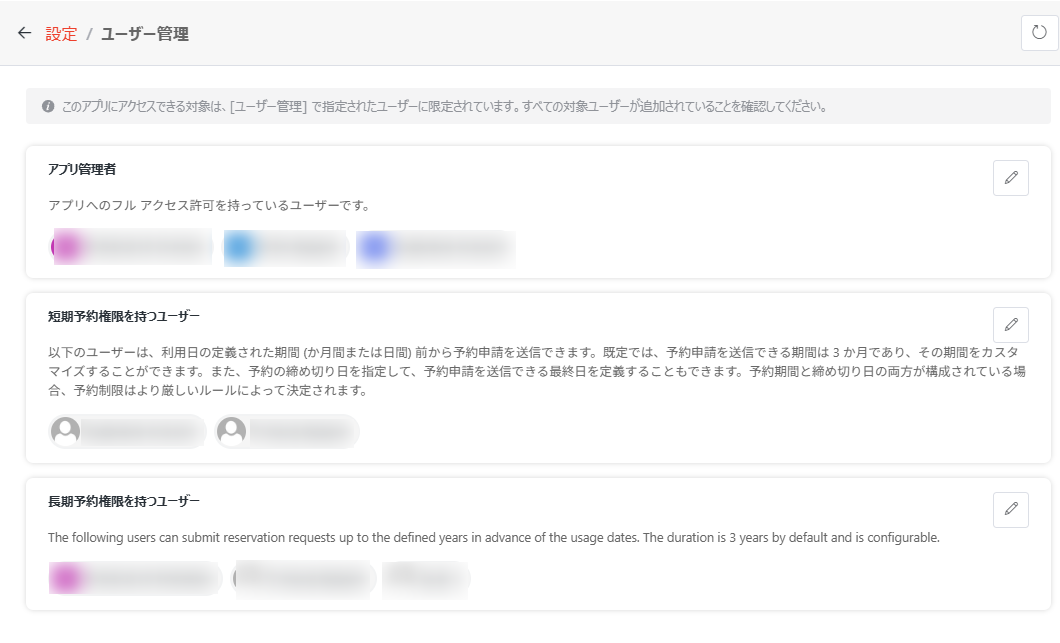
Click the User Management tile on the Settings page, and the User Management page appears. On this page, you can manage the app administrators and users.

User Management.

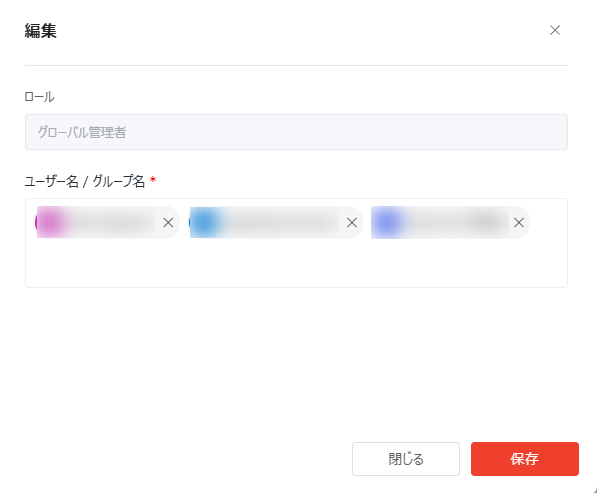
App administrators are users who have full access to the app. To manage app administrators, click the edit button. In the Edit window, the current role is displayed in read-only status. You can add users and groups as app administrators by entering their names in the User/Group Name field or remove existing app administrators by clicking the delete button next to them. Click Save when you finish editing the app administrators.

NOTE

Users who are blocked from signing in to Microsoft 365 cannot be added as app administrators.

Edit app administrators.

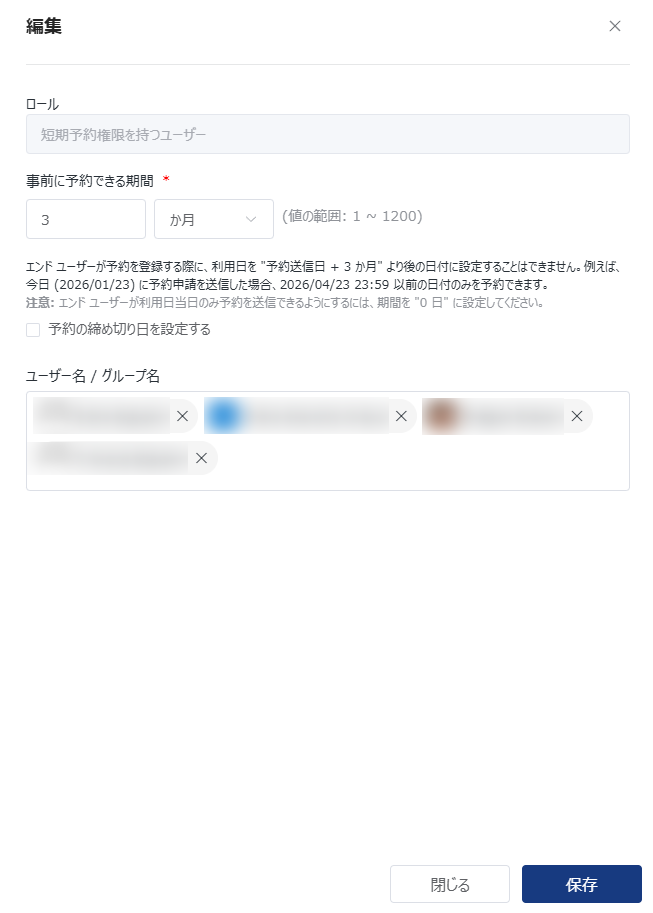
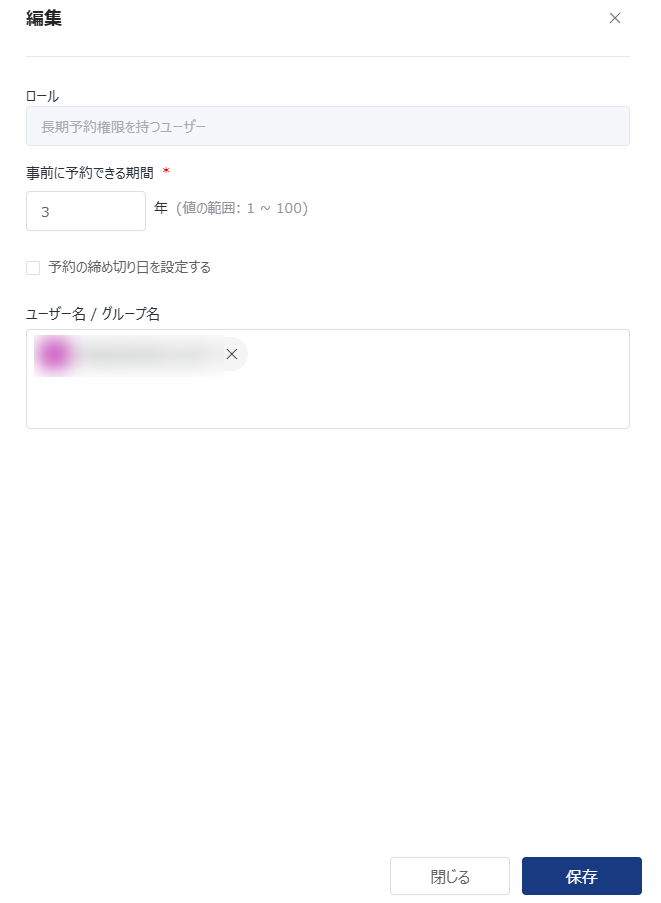
Based on the reservation period allowed, users are categorized into those with short-term reservation permissions and those with long-term reservation permissions. By default, these users can reserve vehicles starting from 3 months or 1 year before the intended usage date. The short-term and long-term periods can be customized. To manage users of each category, click the edit button. In the Edit window, the user category currently being edited is displayed in read-only state. Follow the steps below to manage app users:

NOTE

Users who are blocked from signing in to Microsoft 365 cannot be added as app users.

  1. In the Date Range for Reservation section, complete the following configurations:

    • For users with short-term reservation permissions, enter a number and then select either Days or Months as the time unit. The number you can enter varies with the selected time unit. When Days is selected, you can enter 0 to limit end users to make reservations for the request date only.

      Edit users with short-term permissions.

    • For users with long-term reservation permissions, enter a number before Years to define the period.

      Edit users with long-term reservation permissions.

  2. You can choose to Set Reservation Cutoff Date and select the date as the last day any reservation can be submitted.

    NOTE
    • The reservation cutoff date for users with short-term reservation permissions cannot be later than that of users with long-term reservation permissions.

    • When both reservation date range and cutoff date are configured, the more restrictive rule will be enforced.

  3. In the User/Group Name field, enter the user or group name to whom you want to assign the role and select the desired user or group from the suggestion list. You can add multiple users and groups. To remove existing app users, click the delete button next to them.

  4. After necessary edits are completed, click Save to save your edits.

NOTE

The “Everyone” and “Everyone except external users” groups can be added to both roles. However, if the app resides on a private site and your organization’s policy prohibits adding the “Everyone except external users” group to private sites, attempting to add this group will result in an error. For assistance, contact your SharePoint or global administrator.

Registration Form Configuration

Click the Registration Form Configuration tile on the Settings page, and the Registration Form Configuration page appears.

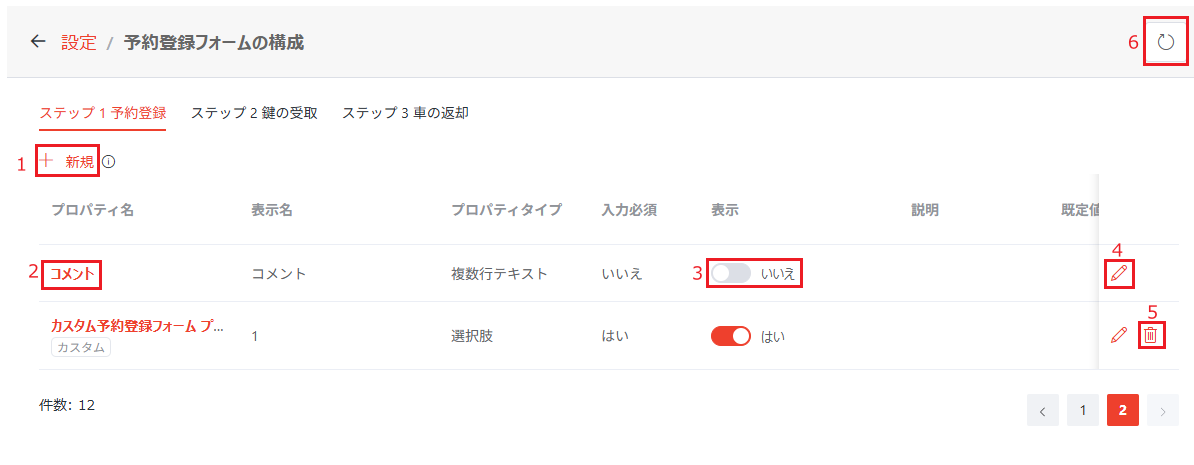
On this page, the following tabs are available, allowing you to compose the registration form for the corresponding stage: Step 1 Registration, Step 2 Key Pick Up, Step 3 Vehicle Returned. For each tab, you can perform the following actions:

Registration form configuration.

  1. Add Custom Property – Click Add Property above the table. In the Add Property window, fill in the fields and click Save to add the property.

    NOTE

    A maximum of 50 properties is allowed across all steps. When the limit has reached, the Add Property button will be greyed out and not clickable.

  2. View Property Information – Click the desired property name link to access the Property Information window.

  3. Update Display Setting – Turn on/off the toggle in the Visible for End Users column to define whether to display or hide the property from the Registration window for the current step.

    NOTE

    The display setting for some properties cannot be changed.

  4. Edit Property Information – Access the Edit Property window by clicking the edit button next to the property or clicking Edit in the Property Information window. Update information in the window and click Update when you finish.

  5. Delete Custom Property – Click the delete button next to a custom property to delete the property.

  6. Refresh – Click the refresh button in the upper-right corner of the page to refresh the properties displayed on this page.

General Settings

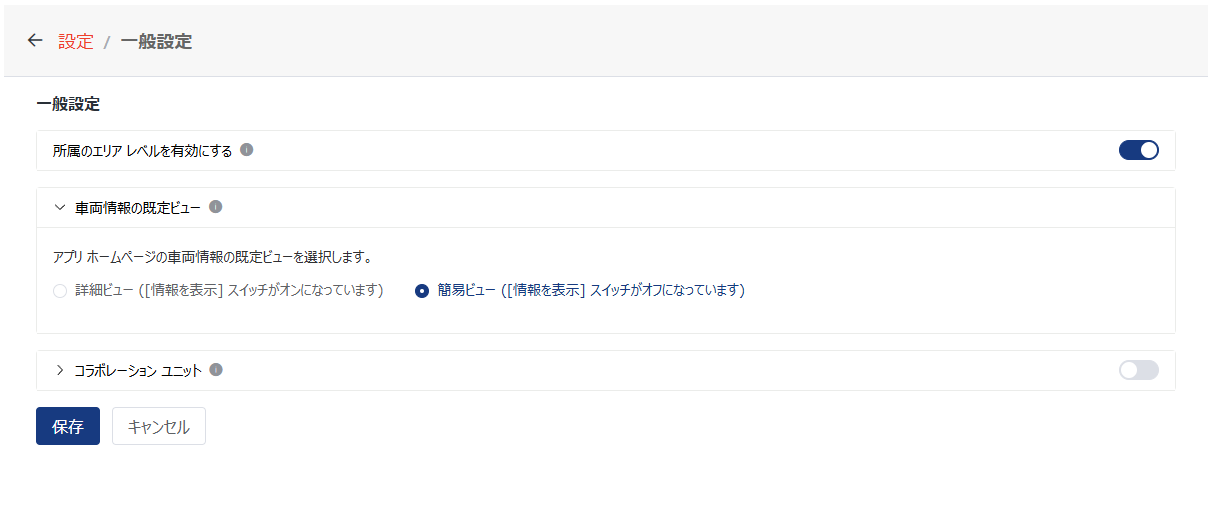
Click the General Settings tile on the Settings page, and the General Settings page appears. On this page, you can configure the following settings:

NOTE

Make sure to click Save after updating any setting, otherwise your changes will be lost.

General Settings.

  • Enable Area Level for Department – Enable an additional “area” hierarchy level to organize vehicles within a department into specific areas. This setting is disabled by default. When enabled, there will be three levels: department, area, and vehicle. The Area Management setting will be available on the Settings page, allowing you to manage areas. If disabled again. The structure will revert to two levels (department and vehicle), the Area Management setting will be hidden, and all area-related settings will be disabled and no longer visible.

  • Default Vehicle Information View – You can select the default view for vehicle information displayed on the app homepage:

    • Detailed View – Vehicle details will be displayed in the vehicle listing by default.

    • Brief View – Only vehicle names will be displayed in the vehicle listing by default.

    End users can change the displayed view using the Show Info toggle on the app homepage.

  • Collaboration Units – Choose whether to enable the collaboration units functionality. This function is disabled by default. Once enabled, assistants can submit reservations on behalf of principals and manage reservations for other assistants who have selected the unit within the Registration panel. If the Collaboration Units setting is enabled, follow the instructions below to manage collaboration units:

    • Add Collaboration Unit – Click Add Collaboration Unit. In the Add panel, enter the collaboration unit name, specify the assistants and principals, and click Add. You can add multiple users and groups as assistants and principals.

      NOTE
      • Once the function is enabled, add at least one collaboration unit. If you save the setting without adding any collaboration unit, the function will be disabled automatically.

      • If you disabled the function and later re-enable it, the previously added collaboration units will remain available.

    • Edit Collaboration Unit – Click the more actions button to the right of the collaboration unit you want to edit and click Edit. In the Edit panel, you can edit the collaboration unit name, assistants, and principals based on your requirements and click Save to save your updates.

      If users are removed from the assistants, they’ll no longer be able to view or manage reservations made by other assistants. Additionally, if those users are not reservation administrators, they’ll also lose the ability to submit reservations on behalf of the unit’s principals. When users are not assistants of any collaboration unit, the Collaborative Reservations tab will be hidden from their My Reservations page.

    • Delete Collaboration Unit – To delete a collaboration unit, click the more actions button to the right of it and click Delete.

      When a collaboration unit is deleted, all reservations for this unit will no longer be visible to assistants and will be visible to the “Reserve For” user of each reservation only.

App Permissions

The following table lists the user roles and their permissions to the app:

PermissionApp AdministratorDepartment AdministratorArea AdministratorDepartment Vehicle AdministratorDepartment Reservation AdministratorArea Vehicle AdministratorArea Reservation AdministratorEnd UserComment
Manage users
Manage Vehicle Properties
Add Departments
Delete Departments
Edit DepartmentsDepartment administrators can only edit the departments they own.
Add Areas
Delete Areas
Edit AreasArea administrators can only edit the areas they own.
Add Vehicles
Delete Vehicles
Edit VehiclesArea administrators can only edit vehicle within the areas they own.
Export ReportsApp administrators can export reservation reports of all departments, while others can only export those they own.
View Auditor
Manage Email Templates
Manage My Reservations
Manage Other Users’ Reservations
View Other Users’ Reservations